
Commodity memory prices set to double as fabs pivot to AI market
Summary
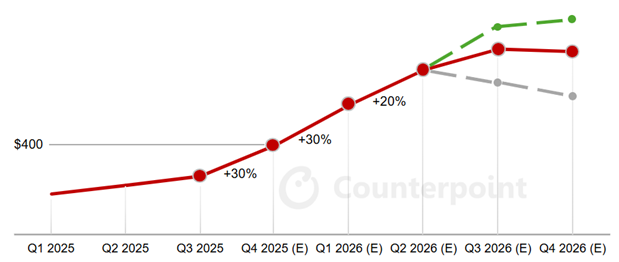
Analysts at Counterpoint Research warn that commodity memory prices could roughly double by mid-2026 as chipmakers reallocate production to higher-end DRAM and HBM for AI workloads. They forecast a ~30% rise by the end of 2025 and a further ~20% in H1 2026, on top of around 50% increases seen earlier in 2025. The shift is creating shortages of mature parts such as LPDDR4, while suppliers prioritise DDR5, server DRAM and HBM used by AI datacentres.
Key industry notes: DDR4 and older consumer parts are already seeing price rises and, paradoxically, some older commodity parts are becoming more expensive than some high-end offerings. Counterpoint flags Nvidia’s use of LPDDR as a potential stress point for advanced memory supply, and Samsung has reportedly hiked prices sharply this year.
Key Points
- Counterpoint forecasts memory prices to rise ~30% by end-2025 and another ~20% in H1 2026, implying a doubling from Q1 2025 levels by mid-2026.
- Suppliers are shifting fab capacity from mature commodity parts (LPDDR4, DDR4) to higher-margin, advanced memory (DDR5, HBM, server DRAM) for AI workloads, tightening supply for consumer devices.
- Reported price anomalies: some DDR4 parts have traded higher than HBM3e in recent pricing snapshots.
- Nvidia’s move to LPDDR in some products is cited as a large new source of demand that could strain supply chains used to serving smartphone-scale customers.
- Samsung has raised memory prices (reported ~60% since September), and TrendForce says memory cost share of a laptop BOM could exceed 20% in 2026.
Why should I read this?
Short version: if you buy or spec phones, PCs, servers or manage procurement you need to know prices are likely to climb — and fast. This isn’t a slow market wobble; fabs are chasing AI dollars and that squeezes the older chips most of us actually use. Read this to avoid being blindsided when component quotes jump and product BOMs get fatter.
Context and relevance
This piece matters because it links the macro shift to AI infrastructure with direct cost impacts on consumer and enterprise hardware. As fabs reallocate capacity to high-end DRAM and HBM for datacentres and AI accelerators, commodity DRAM used in smartphones, laptops and embedded devices is in short supply. That squeezes supply chains, alters OEM pricing strategies and can push up device costs across the board.
For IT buyers, hardware vendors and product managers, the trend signals the need to plan inventory, negotiate longer-term contracts or consider redesigns that tolerate different memory types. For the broader market, expect increased component-driven inflation in devices through 2026 if forecasts hold.
Source
Source: https://go.theregister.com/feed/www.theregister.com/2025/11/19/commodity_memory_price_rise/