
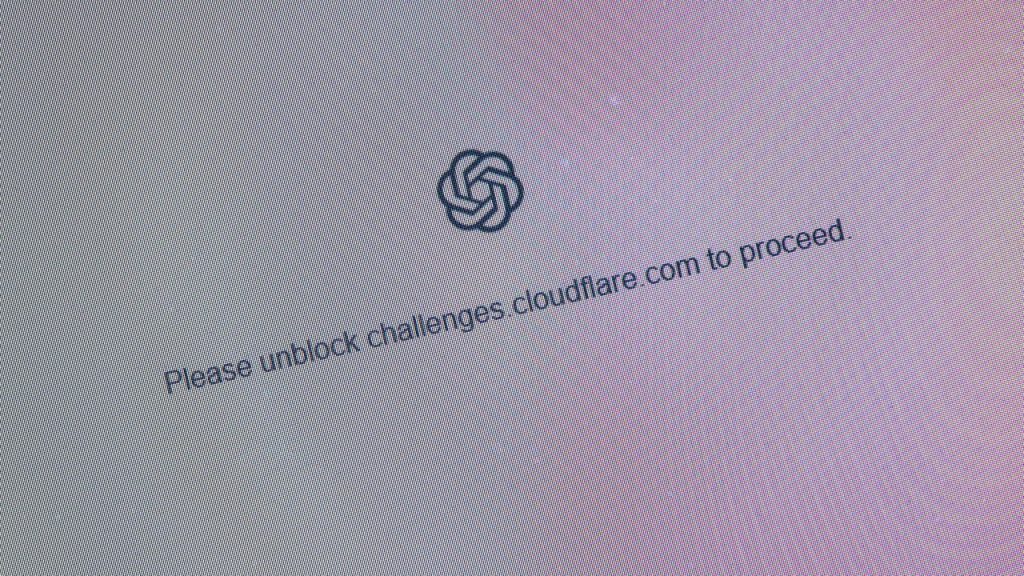
Cloudflare’s One-Stop-Shop Convenience Takes Down Global Digital Economy
Summary
Cloudflare suffered a major outage that rippled across the internet, taking high-profile services like X and ChatGPT offline and causing widespread 500 errors across numerous sites. The failure stemmed from a combination of a latent bug in its bot mitigation system, a routine configuration update, and an oversized auto-generated threat traffic configuration file that produced cascading failures across Cloudflare’s distributed network. The incident exposed how dependency on large, centralised edge providers creates a systemic single point of failure for the global digital economy.
Key Points
- Cloudflare routes roughly 20% of global web traffic; its outage immediately affected major platforms including X, ChatGPT, Canva and Shopify.
- Root causes combined: a latent bot-mitigation bug, a routine configuration change, and an oversized auto-generated config file leading to cascading failures.
- Even fault-tolerant, distributed architectures remain vulnerable to software/configuration errors that can propagate globally.
- Centralised “one-stop-shop” providers reduce operational complexity but increase systemic risk and vendor lock-in.
- Decentralised solutions like blockchain/Web3 are not a simple cure — they bring their own scalability and security challenges.
- Recommended mitigations: multivendor strategies, strict service isolation, segmentation and avoidance of commingling all services with a single provider.
Content Summary
The outage began when an update interacted with a latent bug in Cloudflare’s bot mitigation, producing an oversized auto-generated threat-traffic configuration file. That combination triggered cascading failures across Cloudflare’s globally distributed network, manifesting as 500 errors and service interruptions for numerous dependent sites and platforms.
The article argues this incident is more than an operational hiccup: it demonstrates the structural risk of centralised edge and security service providers. While Cloudflare’s architecture is designed to be fault-tolerant — using anycast, high-availability clusters and dynamic routing — software and configuration errors can still cause global disruptions. Calls for decentralised alternatives overlook practical limits: DLT and Web3 face their own unresolved scalability and security problems and would not have automatically prevented the kind of configuration-propagation failure described here.
The pragmatic path recommended is architectural diversification: run multiple vendors for DNS, CDN, WAF and storage; isolate services to minimise blast radius; and avoid putting all delivery, performance and security functions under one provider. This reduces vendor lock-in, improves cost control and limits systemic risk without requiring a wholesale reinvention of the internet.
Context and Relevance
This incident is significant for any organisation that depends on third-party edge services for availability, security and performance. It highlights current industry trends toward consolidation at the edge and the resulting concentration of risk. For security leaders, architects and ops teams, the outage is a concrete case study showing why resilience planning must include multivendor designs, segmentation and robust change-control to prevent configuration-propagation failures.
Why should I read this?
Short version: if you run sites or services that rely on big edge providers, this is your wake-up call. The piece cuts through the noise and shows exactly how a small config plus a bug can cascade into a global outage — and gives practical direction on how to stop that happening to you. No fluff, just the stuff you actually need to consider tomorrow.
Author / Takeaway (Punchy)
Dr David Utzke — a recognised figure in blockchain, digital forensics and decentralised systems — uses this outage to hit home a point: Cloudflare’s tech isn’t broken by design, but our reliance on centralised convenience creates intolerable systemic risk. The takeaway: plan for diversity, isolate services, and treat configuration changes like the nuclear launch codes.