
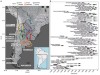
A distinctive human genetic lineage persisted in central Argentina for 8,500 years
Summary
Analyses of ancient DNA from individuals dated between roughly 10,000 and 150 years ago reveal a previously uncharacterised human genetic lineage in the Southern Cone (modern Argentina, Chile and Uruguay). The new lineage shows long-term continuity in central Argentina for about 8,500 years and also contributed ancestry to neighbouring groups through admixture events. Modern genomes from the region retain traces of this lineage, supporting genetic persistence over millennia.
Key Points
- Researchers identified a distinct lineage in the Southern Cone using ancient genomes spanning ~10,000 to 150 years ago.
- The lineage shows continuity in central Argentina for roughly 8,500 years, making it long-standing and regionally persistent.
- Individuals with this ancestry mixed with pre-existing neighbouring populations, producing detectable admixture in the archaeological record.
- Contemporary genomes from central Argentina retain signals of this lineage, indicating genetic continuity into present-day populations.
- The finding reshapes local population-history models and highlights the complexity of prehistoric population structure in South America.
Context and relevance
This study, summarising Maravall-López et al. (Nature, 2025), adds to a wave of ancient-DNA research showing deep and regionally specific population structure in the Americas. It demonstrates that distinct, long-lived lineages existed at subcontinental scales and were not simply replaced wholesale by later movements. The result is relevant to geneticists, archaeologists and Indigenous communities interested in ancestry, migration and the persistence of local populations.
More broadly, the work emphasises how dense temporal sampling—ancient individuals across millennia—can reveal continuity that modern-only studies might miss. It also underscores the importance of integrating archaeological context and engaging descendant communities when interpreting genomic continuity and admixture.
Why should I read this?
Short answer: because this paper quietly upends a simple story of replacement. If you care about how people moved, mixed and stayed put in South America, this is the sort of careful ancient-DNA work that actually changes the narrative. It’s compact, evidence-driven and directly relevant if you’re following human prehistory, Indigenous ancestries or regional population dynamics.
Author note
Punchy take: this is not just another ancient-DNA datapoint — it’s a clear signal that central Argentina harboured a unique, persistent genetic lineage for millennia. Definitely worth a read if you want the full detail and implications.