
Is there lightning on Mars?
Summary
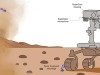
The Perseverance rover has recorded bursts of sound and electromagnetic interference during dust storms that researchers attribute to triboelectric discharges — the Martian equivalent of lightning. Chide et al. (reported in Nature) link these signals to charge separation in dust events picked up by Perseverance’s microphone and sensors. While lightning is well documented on large gas giants, direct evidence for it on Mars has been elusive until now. The observations suggest electrostatic discharges occur in Martian dust storms, though they may differ from familiar Earth thunder and lightning.
Key Points
- Perseverance recorded audio and electromagnetic signatures coincident with passing dust storms, interpreted as triboelectric discharges.
- These signals are presented as the best evidence yet for lightning-like electrical activity on Mars, though not necessarily large thunderbolt-style lightning.
- Previous planetary detections exist for Jupiter and Saturn; Mars and Venus have lacked clear, direct evidence until this report.
- Electrification in dust storms could influence Martian atmospheric chemistry, surface weathering and pose risks to instruments and future missions.
- Findings open new avenues for studying planetary electrification and prompt further observations to confirm frequency, intensity and mechanisms of Martian discharges.
Context and relevance
This is timely for planetary science and mission planning. If dust-driven discharges are common on Mars they affect atmospheric chemistry (including formation/destruction of reactive species), the behaviour of dust and aerosols, and the electrostatic environment experienced by landers and astronauts. The result ties into broader research on planetary weather, prebiotic chemistry and hazards for exploration hardware — and it adds an unexpected dynamic to our picture of Mars.
Why should I read this?
Because Mars might be quietly zapping itself — and that has consequences. This short piece saves you the time of digging through the paper: it flags a neat, surprising observation from Perseverance that could change how we think about dust storms, chemistry and mission safety on Mars. If you like planetary oddities or mission-risk issues, it’s worth a quick read.
Author style
Punchy: this isn’t just another Mars weather note — if the interpretation holds up, it’s a significant twist on Martian meteorology and mission engineering. The original paper is worth reading for details and caveats.