
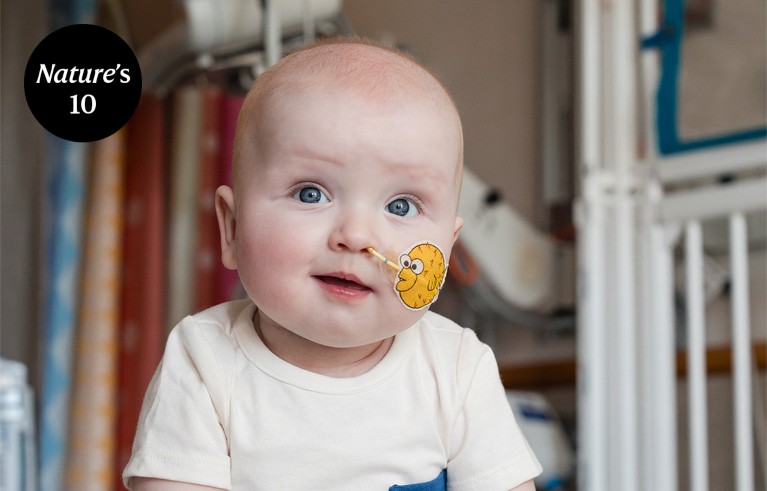
The baby whose life was saved by the first personalised CRISPR therapy
Summary
KJ Muldoon — initially known to researchers as Patient Eta — became the first person to receive a bespoke, personalised CRISPR-based genome-editing therapy. Born with ultra-rare carbamoyl-phosphate synthetase 1 (CPS1) deficiency, KJ was at acute risk from toxic ammonia build-up. A multidisciplinary team used base editing (a precise CRISPR offshoot) to correct a single faulty DNA letter in his liver. The therapy was developed and manufactured in an accelerated timeline and delivered as three infusions; KJ’s tolerance for protein has improved, though he still needs medication and monitoring.
Key Points
- KJ had CPS1 deficiency, a life-threatening metabolic disorder that prevents the body clearing ammonia produced from protein breakdown.
- The treatment was a hyper-personalised CRISPR base-editing therapy designed to correct a single-point mutation unique to KJ.
- Researchers and industry partners compressed an estimated 18-month development process into roughly six months to meet the baby’s urgent clinical window.
- KJ received three infusions beginning 25 February; his protein tolerance has increased but ongoing medication and monitoring remain necessary.
- This case marks the first known use of a patient-specific genome-editing therapy in the clinic and highlights logistical, ethical and manufacturing challenges for personalised gene-editing approaches.
Content summary
Shortly after KJ’s birth in August 2024 clinicians identified signs of CPS1 deficiency, which can rapidly lead to fatal ammonia accumulation. Standard treatment often requires liver transplant and many affected infants die early. Clinicians Rebecca Ahrens-Nicklas and Kiran Musunuru proposed correcting the defective liver enzyme using base editing. A large, cross-sector team worked under intense time pressure to design, manufacture and test the editing components. The intervention was given as three infusions; early outcomes show clinical improvement but not a complete cure, and long-term follow-up is needed.
Context and relevance
This event is a watershed in gene-therapy: whereas previous CRISPR therapies targeted larger patient groups, this case demonstrates that truly personalised genome editing is technically and logistically possible. It underscores accelerating capabilities in precision medicine — and raises questions about scalability, regulation, equitable access, cost and long-term safety. For researchers, clinicians and policy-makers, KJ’s case is a prompt to prepare frameworks for similar bespoke interventions.
Author style
Punchy: this is a big deal — a carefully told human story that underlines a major technical milestone. Read the details if you want to understand how science, ethics and urgent clinical need collided to produce the first patient-specific CRISPR treatment. The article is both a human-interest piece and a signal of where gene therapy is headed.
Why should I read this?
Because it’s one tiny baby who just forced the biotech world to sprint. If you’re interested in how personalised medicine actually happens (not just in theory), this story shows the chaos, collaboration and speed required — and why that matters for patients, regulators and anyone following gene therapy.