
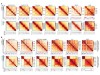
Systematic maps reveal how human chromosomes are organized
Summary
Article Date: 17 December 2025
Author: Elzo de Wit
Article URL: https://www.nature.com/articles/d41586-025-03808-9
Image: Chromosome organisation image
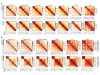
The Nature News & Views piece summarises the first-phase results from the 4D Nucleome Consortium: a large-scale effort to systematically catalogue how human chromosomes are folded inside nuclei and how that folding changes over time. The write-up highlights that chromosomes are highly organised at the molecular level, and that this organisation underpins gene regulation, DNA replication and repair. The flagship Nature paper provides an integrated, multi-technique view of the human 4D nucleome and outlines general organising principles.
Key Points
- Chromosomes are not amorphous in the nucleus: they have reproducible, non-random 3D organisation that supports essential genome functions.
- The 4D Nucleome Consortium has produced a flagship, integrated map of chromosome structure and dynamics as part of a systematic effort across the human genome.
- Organisation of the genome—loops, compartments and higher-order folding—helps control gene expression, and affects DNA replication and repair.
- The project combines multiple experimental approaches and time-resolved data to capture how organisation changes (the ‘4D’ aspect).
- These systematic maps create a resource for researchers studying gene regulation, developmental processes and disease-associated structural changes.
Content Summary
The article explains that the familiar X-shaped chromosome only appears during cell division; otherwise chromosomes adopt complex, folded conformations that are invisible to plain microscopes but detectable by genomic and imaging methods. The 4D Nucleome Consortium’s first-phase paper builds a comprehensive view of chromosomal folding across human cells and over time, integrating datasets to extract common organising principles and functional links to gene regulation.
The News & Views piece emphasises that these maps are ambitious and foundational: they bring together diverse data and point to mechanisms such as loop formation and compartmentalisation while helping to interpret how changes in structure can influence cellular behaviour and disease.
Context and Relevance
This work sits at the intersection of molecular and computational biology. As large-scale, integrative atlases become standard, this resource will help researchers connect DNA sequence, 3D structure and function. It advances ongoing trends in spatial genomics and will be important for anyone studying regulatory architecture, chromosomal rearrangements or mechanistic models of genome folding.
Why should I read this?
Short version: if you care about how genes are actually controlled inside cells, this is proper must-see material. The consortium has done the heavy lifting — collating and integrating lots of messy data — so you don’t have to. Read it to get a clear picture of the organising rules that govern the human genome and to spot where structure might explain function (or dysfunction) in disease.