
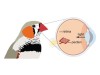
Illuminating how the bird inner retina works without oxygen solves a 350-year-old structural mystery
Summary
Birds have a thick inner retina packed with neurons but, unusually, that layer lacks its own blood supply. New work reported in Nature shows that neurons in the zebra finch inner retina can operate continuously without oxygen. The study identifies the pecten — an enigmatic, comb-like structure in the bird eye described centuries ago — as a key supporter of this oxygen-free metabolism. Together, these findings explain the pecten’s long-mooted physiological role and resolve a structural mystery that has persisted for about 350 years.
Key Points
- The inner retinal layer of birds is densely packed with neurons but lacks an internal blood supply, creating a major oxygen-delivery problem.
- Damsgaard et al. demonstrate that zebra finch inner-retina neurons function in a continuous absence of oxygen.
- The pecten oculi is shown to support oxygen-free (anaerobic) metabolism in the inner retina, supplying metabolites and enabling neuronal activity without direct blood flow.
- This work provides a clear physiological explanation for the pecten’s existence, resolving a centuries-old structural mystery about its function.
- Implications extend to our understanding of eye evolution, retinal metabolic specialisations and comparative physiology across vertebrates.
Context and Relevance
The findings matter because they reveal a fundamentally different solution to a universal problem: how high-energy neural tissue can be supported when standard vascular supply is absent. The pecten has long been an evolutionary curiosity; demonstrating its role in supporting oxygen-free metabolism ties anatomy to function. This alters how we think about avian vision, retinal energetics and evolutionary adaptations in sensory organs, and may inform broader studies of metabolic resilience in neural tissues.
Author style
Punchy: this is not just another eye paper — it ties an odd anatomical structure to a clear metabolic role and closes a historical loop. If you work on vision, metabolism or evolutionary anatomy, the primary study is worth a careful read; the News & Views commentary highlights why the result matters.
Why should I read this?
Short answer: because it finally explains why birds have that weird comb in their eyes. If you like clever biological hacks, evolution mysteries getting solved, or how tissues cope without blood and oxygen — this is a neat, tidy piece of science that saves you the slog of digging through the primary data to get the headline.