
The transition from monocyte to tissue-resident macrophage requires DHPS
Article meta
Article Date: 21 January 2026
Article URL: https://www.nature.com/articles/s41586-025-09972-2
Article Title: The transition from monocyte to tissue-resident macrophage requires DHPS
Article Image: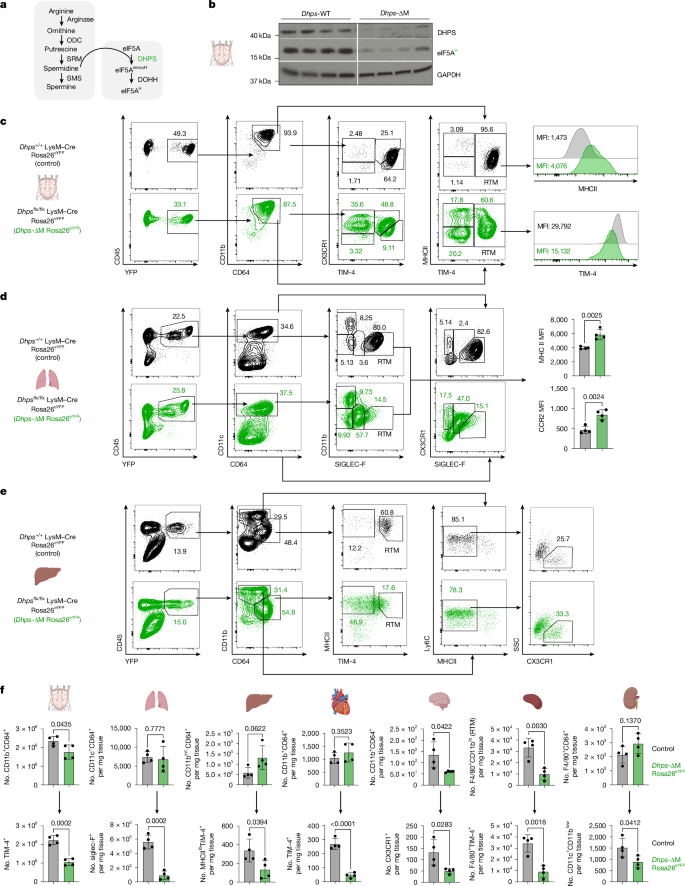
Summary
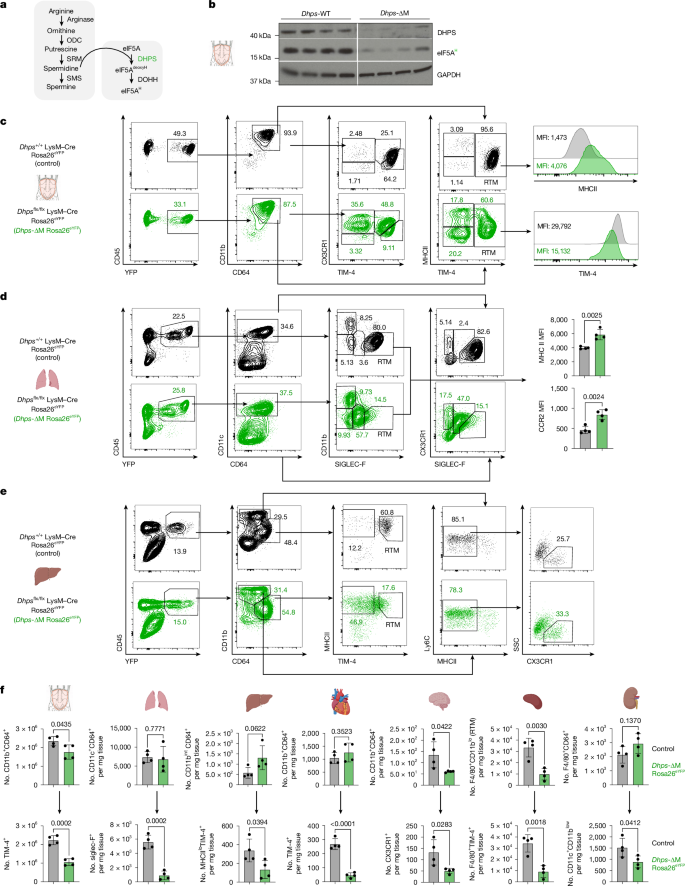
This Nature study demonstrates that the enzyme deoxyhypusine synthase (DHPS), which enables hypusination of eIF5A during translation, is essential for monocytes to mature into functional, long‑lived tissue‑resident macrophages (RTMs). Using multiple mouse models with myeloid- or macrophage-specific Dhps deletion, the authors show a widespread loss of mature RTMs across tissues (lung, liver, brain, heart, kidney, spleen, peritoneum). DHPS-deficient macrophages survive poorly, fail to adopt tissue‑resident transcriptional programmes, are defective in adhesion and signalling molecule expression, and cannot perform key homeostatic tasks such as efferocytosis and surfactant clearance. Ribosome‑associated sequencing and proteomics link the phenotype to reduced translation of a set of adhesion and signalling genes that appear DHPS (hypusine) dependent.
Key Points
- DHPS is required cell‑intrinsically for monocytes to differentiate into mature, self‑renewing tissue‑resident macrophages across multiple organs.
- Mice lacking DHPS in myeloid cells (Dhps‑ΔM) show marked depletion of canonical RTM markers (eg TIM‑4, Siglec‑F, CX3CR1) despite presence of F4/80+ macrophage‑like cells.
- Loss of DHPS leads to reduced macrophage proliferation, increased apoptosis (active caspase‑3), and persistent monocytic influx that fails to restore RTM pools.
- RiboTag ribosome‑associated RNA sequencing and proteomics reveal decreased translation/expression of adhesion and signalling proteins (eg ST2/Il1rl1, TNIK, L1CAM, E‑cadherin) in DHPS‑deficient macrophages.
- Functional consequences include impaired efferocytosis, defective clearance of stressed red blood cells, alveolar proteinosis and compromised tissue homeostasis after macrophage depletion.
- The phenotype suggests a model where CSF1R-driven macrophage identity is established but the polyamine–hypusine axis (via DHPS) is necessary for tissue residency and the acquisition of tissue‑specific programmes.
Content summary
The authors used conditional Dhps floxed mice crossed to LysM–Cre and inducible CX3CR1–ERT2Cre drivers, plus Rosa26‑YFP and RiboTag tools, to interrogate DHPS function in monocytes and macrophages. In Dhps‑ΔM mice DHPS protein and eIF5A hypusination were reduced, and flow cytometry plus imaging showed selective loss of mature RTM populations across the peritoneum, lung, liver, heart, brain, spleen and kidney. Parabiosis and bone‑marrow chimera experiments indicate that tissues continually recruit monocytes but these fail to terminally differentiate in the absence of DHPS.
Single‑cell RNA‑seq from peritoneum and lung revealed accumulation of intermediate/immature macrophage clusters in Dhps‑deficient mice and loss of canonical RTM transcriptional signatures (Timd4, Siglecf). Bulk RNA‑seq, proteomics and ribosome‑engaged transcript sequencing pointed to downregulation and reduced translation of genes involved in cell adhesion, integrin/Wnt signalling and tissue interaction. Key examples include reduced ST2 (Il1rl1) and other adhesion/signalling molecules. Functional assays confirmed reduced adhesion, altered morphology and localisation in tissues, impaired uptake and degradation of apoptotic cells, slower clearance of stressed RBCs and development of lung proteinosis and liver pathology after challenge.
Collectively, the data imply that DHPS (through eIF5A hypusination) supports translation of a set of transcripts needed for monocytes to form stable tissue interactions and enact RTM programmes; without it, cells remain immature, inflammatory and unable to maintain tissue homeostasis.
Context and relevance
This work links metabolism (polyamine–hypusine pathway) directly to immune cell fate decisions and tissue residency. RTMs perform essential housekeeping roles in organ health; showing that DHPS is a common, tissue‑independent requirement for the final monocyte→RTM transition identifies a central regulatory node. The finding is relevant to researchers studying macrophage development, tissue repair, immune metabolism, and diseases where RTM function is disrupted (eg pulmonary alveolar proteinosis, chronic inflammation, impaired clearance of debris). It also suggests that modulation of polyamine/hypusination pathways could influence macrophage composition and function in therapy or ageing.
Why should I read this?
Short answer: if you care about how macrophages settle into tissues and keep organs tidy, this paper matters. It shows that a single translation‑related enzyme, DHPS, is indispensable for monocytes to complete the job of becoming bona fide tissue‑resident macrophages. The story ties metabolism to cell adhesion, signalling and real functional defects (poor corpse clearance, lung and liver damage) — so it’s not just molecular theatre, it’s physiology with consequences. Grab this if you want a neat mechanistic link between metabolic state and immune cell fate.
Author style
Punchy: This is a clear, mechanistic Nature paper that elevates the polyamine–hypusine axis from a biochemical curiosity to a central regulator of macrophage tissue residency. If you work on macrophages, innate immunity, or immunometabolism, reading the full experimental detail is worth your time — the datasets (scRNA‑seq, ribosome profiling, proteomics) back up the claims across tissues.