
Greenland is important for global research: what’s next for the island’s science?
Article Date: 23 January 2026
Article URL: https://www.nature.com/articles/d41586-026-00067-0
Article Image: https://media.nature.com/lw767/magazine-assets/d41586-026-00067-0/d41586-026-00067-0_51969790.jpg
Summary
Greenland — an autonomous territory of Denmark often in the geopolitical spotlight — is also a rapidly growing hub for scientific research. The island’s long history of polar exploration and ice‑core work has matured into broad, modern research priorities set out in a 2022 national strategy that runs to 2030. Scientists worldwide study Greenland’s ice sheet because its melt drives global sea‑level rise, but research there also covers geology and critical minerals, unique human genetics and biomedical studies, and marine ecosystems.
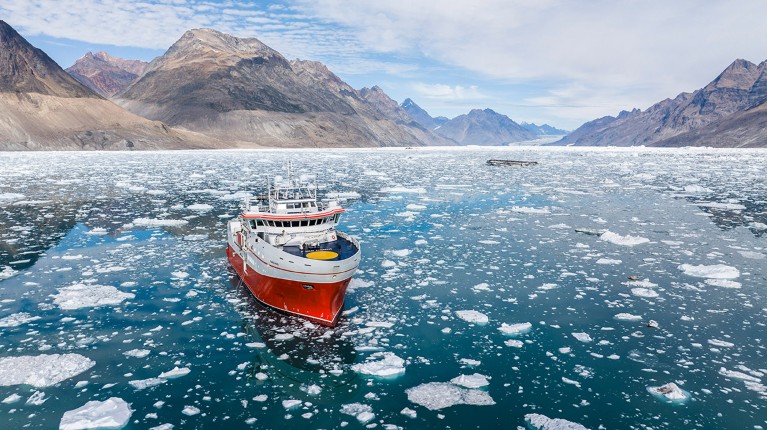
The Greenland government has been investing in research infrastructure: the research vessel Tarojoq (operational since 2022) supports fjord and ocean work, and a new AI‑enabled computing server at the Greenland Institute of Natural Resources speeds analysis of marine video and acoustic data. These steps are strengthening a small but expanding local research community and emphasise that research should be rooted in Greenland and responsive to societal needs. Recent geopolitical attention — notably comments from US political leaders about access to Greenland — adds uncertainty but has not yet clearly changed research priorities or collaborations.
Key Points
- Greenland remains vital for climate science: its ice sheet holds enough water to raise global sea levels by 7.4 metres if it melted entirely.
- Recent losses (about 129 billion tonnes last year) make Greenland responsible for roughly 20% of current sea‑level rise.
- The 2022 Greenland research strategy (to 2030) prioritises anchoring research locally, meeting social needs, and enabling international collaboration and open access to findings.
- Major new infrastructure includes the research vessel Tarojoq (DKK 235 million) and the island’s first AI‑enabled computing resources, enhancing field and data capabilities.
- Greenland’s geology makes it a focus for minerals research (including critical elements such as lithium) with potential economic and geopolitical implications.
- The island’s mostly Inuit population offers unique opportunities for genetic and biomedical research because of long‑term isolation and distinct demographic history.
- Investments are building a burgeoning local research community, but geopolitical interest in Greenland introduces uncertainties for future access and collaboration.
Context and relevance
Greenland sits at the intersection of climate science, geology, biodiversity and geopolitics. Research there informs global sea‑level projections and deepens understanding of Arctic ecosystems and human genetics. The government’s recent investments show a strategic move to host and benefit from research, reflecting wider trends: nations in the Arctic are strengthening scientific infrastructure as the region becomes more accessible and strategically important. For scientists and policy makers, Greenland’s research trajectory matters for climate adaptation planning, resource governance and international collaboration frameworks.
Why should I read this?
Look — if you care about sea‑level rise, resource geopolitics or Arctic science, this is where the action is. The article pulls together why Greenland’s not just a melting ice sheet on the news: it’s a growing, home‑grown research scene with real impact on global climate models, mineral searches and human‑health science. Read it to get the punchy essentials without trawling dozens of papers.
Author style
Punchy. The reporting is concise and aimed at readers who want the significance up front: Greenland’s science matters now, and the island’s investment in infrastructure makes this more than background context — it’s a story about who controls research and data in a changing Arctic.