
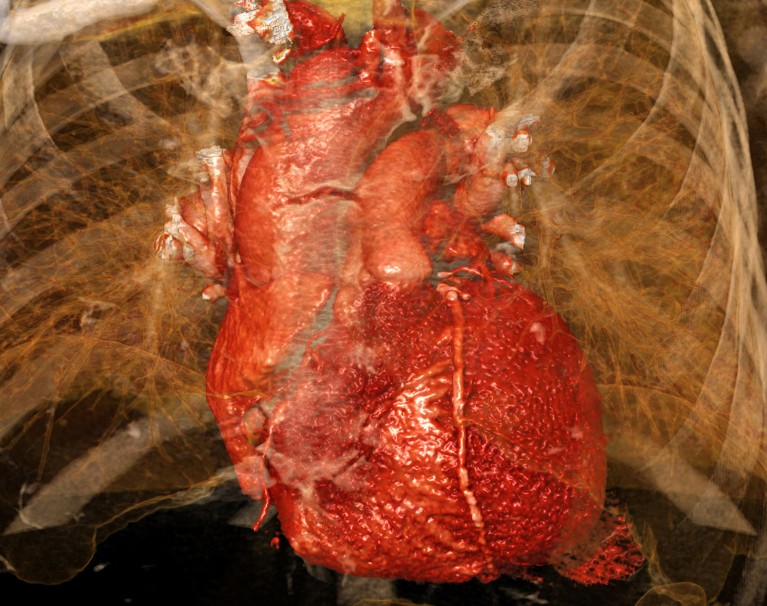
Daily briefing: Brain–immune crosstalk worsens the damage of heart attacks
Summary
A Nature Briefing summarises several short science stories from 29 January 2026. The lead story reports that vagus-nerve signalling drives a damaging heart–brain–immune axis in mice after myocardial infarction, amplifying inflammation and increasing tissue damage; interrupting those signals improved outcomes. Other items cover blue manakins using long ‘tails’ to confuse predators, social media posts acting as early warnings for suspect papers, the threat of survey bots to social-science research, and health benefits linked to forest bathing.
Key Points
- A mouse study implicates vagus-nerve neurons in relaying heart-to-brain signals that trigger immune responses and worsen heart-attack damage.
- Blocking the vagal signalling reduced inflammation and improved post-myocardial-infarction outcomes in the study, pointing to potential new therapeutic approaches.
- Blue manakins decorate nests with long, fluttering ‘tails’ that act as disruptive camouflage; nests without tails were raided far more often.
- Critical posts on X (Twitter) are associated with papers that later get retracted — social media can spotlight suspect research but should be used cautiously by publishers.
- Chatbots impersonating people threaten the integrity of paid online surveys used in social-science research; methods to detect bots need urgent updating.
- Evidence for the health benefits of forest bathing grows; plants’ phytoncides and forest-associated microbes may offer immune and wellness advantages beyond cleaner air.
Content Summary
The headline piece reports a mechanistic mouse study (referenced in Cell) in which neurons in the vagus nerve relay distress signals between the injured heart and the brain during a myocardial infarction. That neural signalling activates immune cascades and inflammation that expand damage across the heart. Experimental interruption of those signals yielded better outcomes after heart attacks in mice, suggesting an actionable target for future interventions.
The briefing then moves through shorter items: behavioural ecology research shows blue manakins build long, fluttering decorations that disguise nest shape and reduce predation; meta-research finds that critical X posts correlate with an increased likelihood of later retraction, suggesting post-publication social-media scrutiny can flag problematic papers; survey-researchers warn that increasingly capable chatbots can game paid online surveys and may invalidate many studies unless protocols change; and a feature examines mounting evidence that forest bathing (shinrin-yoku) offers measurable health benefits, possibly via plant-emitted compounds and exposure to forest-associated microbes.
Context and Relevance
The vagus-nerve finding sits at the intersection of cardiology, neuroscience and immunology: it reframes some post-infarction damage as a neuro-immune problem, not solely a local tissue issue. If the mechanism translates to humans, neuromodulatory or drug approaches that dampen the harmful signalling could reduce scarring and improve recovery after heart attacks. The other brief items are timely for ecologists, publishers, social scientists and public-health advocates — each flags a simple but important shift or risk (behavioural adaptation, oversight via social media, methodological vulnerability to bots, and low-cost wellbeing practices) that matters to practitioners and policymakers alike.
Why should I read this?
Quick and useful — this briefing saves you time. The top story could change how researchers think about treating heart attacks: it’s not just the heart getting hurt, it’s a chat between heart, brain and immune system that makes things worse. The rest of the items are bite-sized, interesting and share practical takeaways (from nest-spotting tricks to why your survey results might be fake). Read it if you want a brisk update on several bits of science that could matter to clinicians, researchers and anyone who likes clever natural-history or public‑health angles.