

Innovative CAR-T therapy destroys cancer cells without dangerous side effects
Article Meta
Article Date: 04 February 2026
Article URL: https://www.nature.com/articles/d41586-026-00358-6
Article Image: Main image
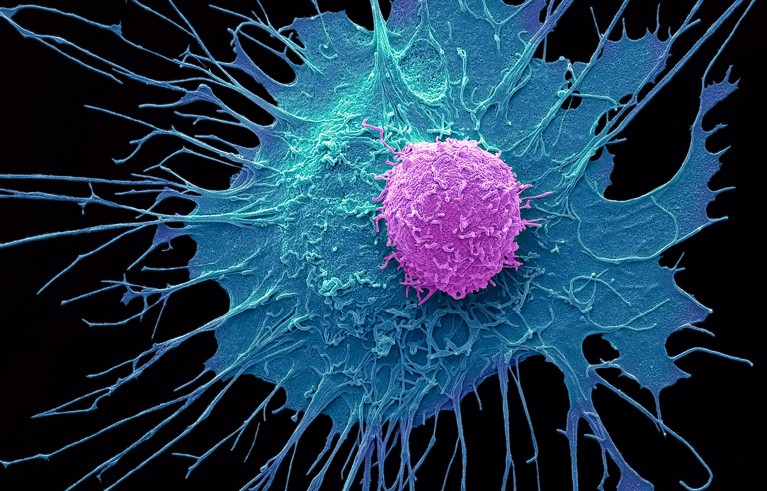
Summary
Researchers have engineered a new CAR-T therapy, called CART4-34, that selectively targets B cells bearing the IGHV4-34 gene and destroys lymphoma cells in mice while sparing healthy B cells. In genetically modified mouse models of diffuse large B-cell lymphoma, CART4-34 matched the tumour-clearing efficacy of conventional CD19 CAR-T therapies but without the broad B-cell depletion that causes long-term immunosuppression and heightened infection risk.
The team — whose preclinical results are reported alongside a paper in Science Translational Medicine — also notes potential applications beyond cancer: IGHV4-34-bearing cells are implicated in autoimmune diseases such as lupus, so CART4-34 might be repurposed to remove pathogenic cells in some autoimmune patients. Key caveats are that the results are preclinical (mice) and human safety and coverage of IGHV4-34 in patient tumours need validation before clinical use.
Key Points
- CART4-34 is a CAR-T design that targets B-cell receptors containing the IGHV4-34 gene, which is enriched in certain tumour cells.
- In mouse models of diffuse large B-cell lymphoma, CART4-34 matched the anti-tumour efficacy of CD19 CAR-T therapy.
- Unlike CD19 CAR-Ts, CART4-34 largely spares healthy, non-cancerous B cells, avoiding the immunosuppression and infection risk seen with CD19-targeting approaches.
- The IGHV4-34 marker is rare on healthy B cells, making it a potentially tumour-specific target with a better safety profile.
- There is potential to treat autoimmune diseases (for example, lupus) where IGHV4-34-bearing antibodies drive pathology.
- Findings are preclinical and in mice; translation to humans will require careful assessment of target prevalence, off-target effects and clinical safety.
Why should I read this?
Short and honest — this could be a game changer. Same punch as current CAR-Ts but without wrecking your immune system. If you care about safer cancer immunotherapy or new fixes for autoimmune disease, this is one to skim now and watch closely.
Author take
Punchy: the study points to a smarter, more selective CAR-T that keeps the tumour-killing power while cutting a serious downside of current treatments — long-term immune suppression. If this actually translates to people, it will matter a lot for patient safety and for broadening who can get CAR-T therapy.
Context and relevance
CAR-T therapies revolutionised treatment for some blood cancers but come with the major trade-off of depleting healthy B cells (when targeting CD19), leaving patients vulnerable to infections. The CART4-34 approach fits into a wider trend of refining immunotherapies for greater specificity and fewer adverse effects. Its potential to address certain autoimmune conditions adds another strategic use-case beyond oncology.
That said, the evidence is from mouse models. Human tumours and immune systems are more variable, so the next steps are to confirm IGHV4-34 prevalence in patients, run safety studies and progress to clinical trials. If those hurdles are cleared, this could shift practice by reducing the need for long-term immunoglobulin replacement and lowering infection-related morbidity after CAR-T treatment.