
Nation-State Hackers Put Defence Industrial Base Under Siege
Summary
Nation-state actors increasingly treat cyberspace as a theatre of persistent operations aimed at the defence industrial base (DIB). Recent analyses from Google, Recorded Future and ESET show a clear pattern: attackers use zero-day vulnerabilities in edge devices and appliances to pre-position access, then pivot into identity and cloud systems for long-term intelligence collection and, if required, disruption.
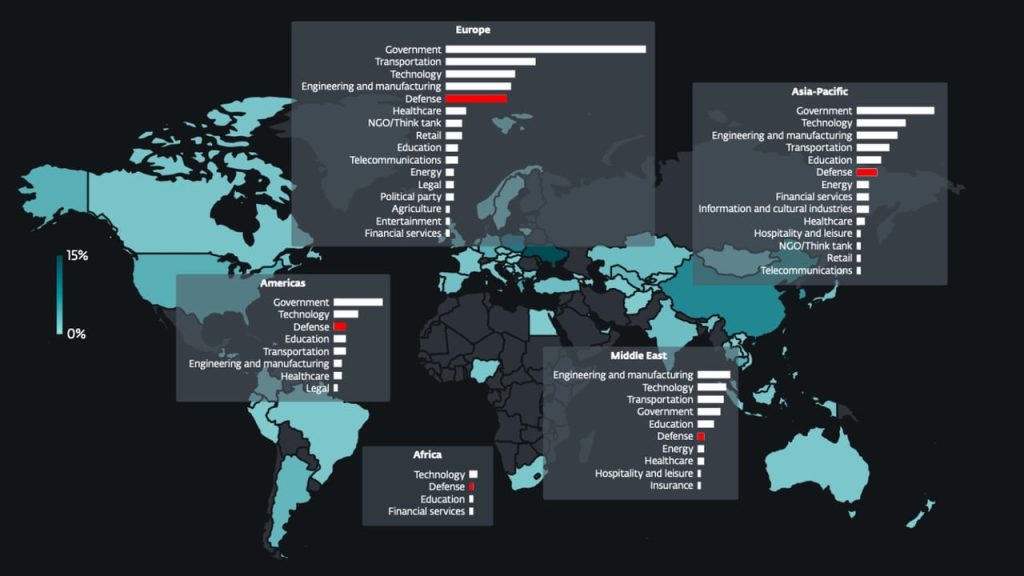
China-linked groups have aggressively targeted defence firms and rolled out zero-days against edge kit. Russian actors have targeted secure messaging and drone operators. Iran- and North Korea-linked groups use social engineering, job portals and fake companies to steal credentials and plant backdoors. CISA’s KEV catalogue and vendor reports highlight hundreds of exploited vulnerabilities in VPNs, gateways and other edge products.
Key Points
- Nation-states are treating cyber operations as continuous campaigns to pre-position access in rival networks, not just one-off attacks.
- Edge devices (VPNs, firewalls, security gateways) are a primary initial-access vector due to slow patching and public exposure.
- Zero-day exploits against edge vendors rose markedly in 2024–2025 and are used to establish persistent footholds.
- Attackers pivot from edge appliances into identity systems and cloud environments to expand their presence and increase impact.
- Adversaries target defence workers directly using tailored phishing, fake employer profiles, malicious résumé builders and job sites.
- Multiple nation-state groups (China-linked, Russia-linked, Iran-linked, North Korea-linked) are active against the DIB and related sectors.
- Enterprise organisations outside the DIB face the same risks: public-facing applications and perimeter kit present attractive return-on-investment for attackers.
- Defensive priorities are clear: secure and monitor edge devices, integrate perimeter security with identity and cloud controls, patch promptly and assume continuous access attempts.
Context and Relevance
This coverage matters because it demonstrates a strategic shift: cyber operations are now about long-term access and influence, not only immediate disruption. For organisations that supply or work with defence customers, the bar for risk is higher — attackers will keep trying to live undetected on the network edge so they can harvest credentials and sensitive programme data over months or years.
More broadly, the tactics used against the DIB (edge zero-days, pre-positioning, social engineering via job channels) are being applied across industries. That means any organisation with public-facing appliances or weak identity controls is a potential target. The article ties vendor vulnerability data (CISA KEV), threat reports (Google GTIG, Recorded Future, ESET) and real-world campaigns together to show why defenders should prioritise the edge now.
Why should I read this?
Quick take: attackers aren’t just splashing headlines — they’re quietly moving in and staying put at the network edge. If you manage appliances, hire staff, or run cloud/identity services, this is relevant. Read it to get a clear sense of the techniques being used right now and what you should lock down first.
Author style
Punchy — the reporting cuts to the point: this isn’t a distant risk, it’s an active, strategic campaign targeting suppliers, contractors and the perimeters of almost every organisation. If you care about protecting sensitive programmes or stopping credential theft, the detail in the article is worth your time.