
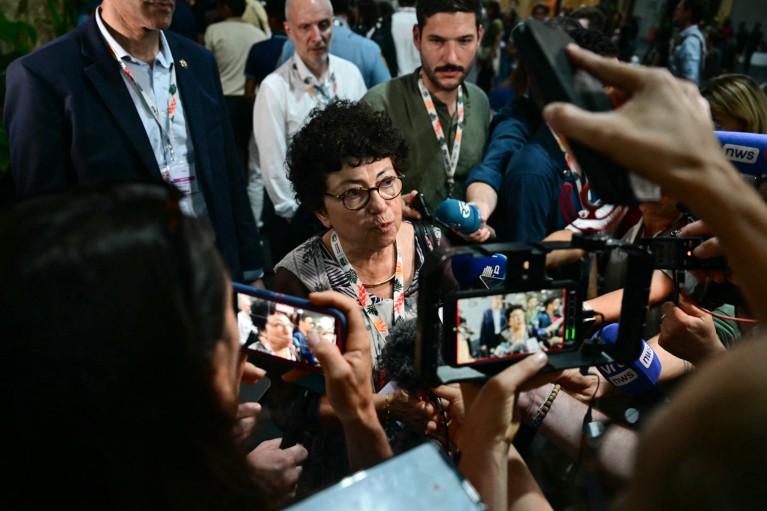
Science journalism on the ropes worldwide as US aid cuts bite
Article Date: 19 February 2026
Article URL: https://www.nature.com/articles/d41586-026-00117-7
Article Image: https://media.nature.com/lw767/magazine-assets/d41586-026-00117-7/d41586-026-00117-7_52042438.jpg
Summary
Federal freezes to US foreign-assistance funding — most notably the closure of USAID in 2025 — have rippled through the ecosystem that supports science, environment and health reporting worldwide. Grant-funded investigative projects and travel support that enabled in-depth coverage, especially from low- and middle-income countries, have been slashed or halted. Organisations such as InfoNile, Internews and the Earth Journalism Network report large budget drops and cancelled programmes. Philanthropic giving for science, health and environment journalism was already declining; the USAID cuts have exacerbated the squeeze. The result: fewer cross-border investigations, reduced attendance at global climate and science meetings, diminished accountability reporting and a greater risk of misinformation filling the vacuum.
Key Points
- USAID shut down in July 2025; it had been a major funder of international development and science-related journalism.
- Grant-reliant networks (for example InfoNile, Global Forest Watch, Internews and Earth Journalism Network) have seen steep budget falls and lost multi-year funding streams.
- Specific investigations — such as the June 2025 timber smuggling exposé in the Congo and Burundi — were only possible because of grant support that is now threatened.
- US government funding earmarked in 2024 for independent media (~US$272 million) was due to drop sharply in 2025, cutting programmes that supported reporting worldwide.
- Philanthropic grants for science, health and environment journalism fell from about US$86.5 million in 2021 to US$63 million in 2023, even before the USAID freeze.
- Foundations are now inundated with requests; many prioritise direct research grants over journalism, leaving reporting lower on the list.
- Reduced reporting capacity increases the risk of poor oversight, less scrutiny of environmental and public-health issues, and a rising tide of misinformation.
- Smaller outlets, freelance journalists and coverage from poorer countries are disproportionately affected, undermining global and local accountability.
Context and relevance
This piece sits at the intersection of funding, geopolitics and information integrity. Science journalism has long relied on a mixed economy of advertising, subscriptions and grants; when a major funder disappears, the whole system tilts. The USAID closure is a geopolitical decision with direct consequences for who can report on biodiversity loss, climate negotiations, public-health crises and corruption. For researchers, policy-makers and communicators, the decline in investigative science reporting means fewer independent checks on projects and policies that affect global health and the environment. For the public, it means less reliable, locally rooted coverage — a fertile gap for misinformation.
Author style
Punchy: the author frames the funding collapse as more than budgetary pain — it is a threat to the global watchdog function of science journalism. If you care about independent reporting, climate and public-health accountability, this article makes the stakes plain and urgent.
Why should I read this?
Short version: if you want to know why fewer stories are coming out of the Congo, South Sudan or COP meetings, and why that matters, this explains it fast. We read the detail so you don’t have to — but do read it if you care about who investigates environmental crime, holds authorities to account, or fights misinformation with solid science reporting.