

Light-confining device can control superconductivity — even in the dark
Article Date: 25 February 2026
Article URL: https://www.nature.com/articles/d41586-026-00296-3
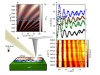
Summary
Researchers report that an optical cavity — a light‑confining device — can strongly alter superconductivity in a nearby organic superconductor even when the cavity is not illuminated. The cavity enhances light–matter coupling so that quantum fluctuations of the confined electromagnetic field modify electronic behaviour. In the reported experiments, coupling to a specific cavity geometry produced a pronounced, localised suppression of superconductivity, demonstrating that cavities can be used as a non‑invasive knob to tune electronic phases.
The work builds on the emerging field of cavity materials engineering, where the electromagnetic environment is engineered to change material properties. Crucially, the observed effect arises from vacuum (dark) fluctuations rather than external light, showing that the mere presence of a confined optical mode can reshape superconducting order.
Key Points
- An optical cavity can modify superconductivity via enhanced light–matter coupling even without external illumination.
- Keren et al. demonstrate strong, local suppression of superconductivity in an organic superconductor when coupled to a specially designed cavity.
- The mechanism relies on quantum (vacuum) fluctuations of the confined electromagnetic field rather than classical driving fields.
- Results highlight cavity materials engineering as a route to control electronic phases without changing chemistry, temperature or applied fields.
- Effects are geometry‑ and material‑specific; scalability and generality remain open questions requiring further study.
Content summary
The article summarises a Nature paper showing that optical cavities can alter superconductivity in the dark. By placing an organic superconducting sample in the near field of a cavity mode, the experimenters observed a localized weakening of superconducting order. The phenomenon is attributed to the cavity‑mediated modification of electron interactions via quantum fluctuations of the confined field. The news & views piece places the result in the context of previous theoretical and experimental advances in cavity control of materials, noting both the promise for non‑invasive control and the need to understand limits and mechanisms across different systems.
Context and relevance
This finding sits at the intersection of condensed‑matter physics and quantum optics. It strengthens evidence that engineered electromagnetic environments can be used as a design parameter for materials — a parallel to tuning pressure, strain or doping but without altering composition. For researchers working on quantum materials, superconducting devices, or low‑power electronic control, it suggests new routes to switch or tune phases using cavities. For the wider community, it signals that vacuum fluctuations are not merely a theoretical curiosity but can have practical, localised effects on macroscopic quantum states.
Author’s take
Punchy: clever, surprising and potentially game‑changing. If cavity‑mediated control proves robust across materials, this could open low‑power ways to toggle superconductivity and other collective states — but expect slow, careful follow‑up work to map out when and how it works.
Why should I read this?
Because it’s a neat trick: you don’t shine light on the sample — you change the room the sample sits in, and the superconductor behaves differently. If you’re into quantum materials, device ideas that avoid heat and strong fields, or just love when vacuum fluctuations actually do something useful, this is worth five minutes of your time.