
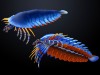
Pincer movement: fossil pushes origins of chelicerate arthropods back to the Cambrian period
Summary
James C. Lamsdell summarises a new Nature paper by Lerosey-Aubril and Ortega-Hernández that presents a fossil specimen bearing chelicera-like pincers. The find provides direct morphological evidence that chelicerates — the group that includes spiders, scorpions and horseshoe crabs — originated in the Cambrian period, earlier than previously documented in the fossil record.
Key Points
- The fossil displays chelicera-bearing front appendages, tying it to the chelicerate lineage.
- Its Cambrian age pushes the known fossil origin of chelicerates back to the Cambrian period.
- The specimen is interpreted as a stem-chelicerate, linking it to modern spiders, scorpions, ticks and horseshoe crabs.
- The discovery helps reconcile morphological fossil evidence with molecular-clock estimates that indicate an early origin for chelicerates.
- Implications include clearer understanding of early arthropod head appendage evolution and the timing of chelicerate diversification in marine ecosystems.
Content Summary
Lamsdell’s News & Views piece puts the new fossil in context: chelicerates are a major arthropod group often seen as modern terrestrial predators, but their deep origin has been debated. The described specimen bears the distinctive chelicerae (pincer-like mouthparts) and is dated to the Cambrian, providing a rare piece of direct fossil evidence for when key chelicerate characteristics first appeared.
The article explains that this fossil strengthens the case that chelicerates diverged early during the Cambrian radiation, and it evaluates how the new data fit with previous fossil finds and molecular phylogenetic studies. The find refines our picture of early arthropod body-plan evolution without overturning existing broad frameworks.
Context and Relevance
This work matters to anyone interested in the evolution of major animal groups. By moving the chelicerate fossil record into the Cambrian, the study narrows gaps between molecular-clock predictions and physical fossils, informs debates about the evolution of head appendages, and helps trace how complex arthropod body plans emerged during the Cambrian explosion. It’s particularly relevant to palaeontology, evolutionary biology and comparative morphology.
Why should I read this
Because it’s a neat, tidy fossil that actually answers a big question: when did the pinchers show up? If you like ancient life, evolutionary puzzles or just clever evidence that rewrites timelines, this is a quick, satisfying read with proper implications for how we think arthropods got their heads together.