
China is planning to land people on the Moon — and might beat the United States to it
Summary
China aims to send crewed missions to the lunar surface by about 2030 using the Mengzhou crew capsule and a separate Lanyue lander that will rendezvous in lunar orbit. Mengzhou — a capsule similar in size to NASA’s Orion — has already completed an uncrewed abort/test flight; further tests, including a mission to the Tiangong station, are planned before any lunar attempt. China’s strong robotic record (far-side landing in 2019 and sample returns in 2020 and 2024) underpins its crewed ambitions.
Possible initial landing sites are equatorial, such as Rimae Bode, prized for diverse geology; both China and the United States are also targeting the lunar south pole for its potential water-ice resources. China and Russia plan to build an International Lunar Research Station in the 2030s. With delays to NASA’s Artemis surface-landing schedule (notably lander readiness), China could become the first nation to land people on the Moon since 1972, though technical and schedule uncertainties remain for all parties.
Key Points
- China plans crewed lunar landings by about 2030 using the Mengzhou capsule and Lanyue lander that will dock in lunar orbit.
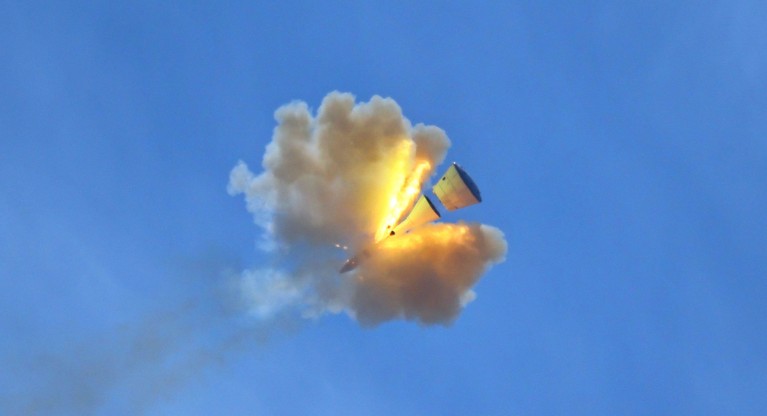
- Mengzhou has passed an uncrewed test of its abort and separation systems; more test flights (including to Tiangong) are expected.
- China has built lunar experience through robotic missions: the far-side landing (2019) and multiple sample-return missions (2020, 2024).
- Rimae Bode is among 14 potential landing sites; it offers rich geology and access to mantle-derived material, aiding planetary science.
- Longer-term aims include south-pole operations to exploit water ice and a joint China–Russia International Lunar Research Station in the 2030s.
- Delays in US lander development for Artemis mean geopolitical competition could determine who reaches the surface first, but mission timelines are still uncertain.
Why should I read this?
Fancy a quick reality check on the space-race headlines? This gives you the nuts-and-bolts: what China’s planning, what it has already proved, and why NASA’s delays matter. Short, sharp and no fuss — handy if you want the big picture without wading through technical reports.
Context and Relevance
This story matters because a crewed lunar landing is both a scientific milestone and a geopolitical signal. If China lands people before the United States, it would reshape perceptions of leadership in space exploration, affect international partnerships (such as the proposed China–Russia ILRS) and accelerate interest in lunar resource use, especially water ice for fuel and habitation. For researchers, industry and policy-makers, the article highlights where technical progress, testing schedules and international competition intersect — all of which will influence funding, collaboration and strategic planning in the coming decade.