
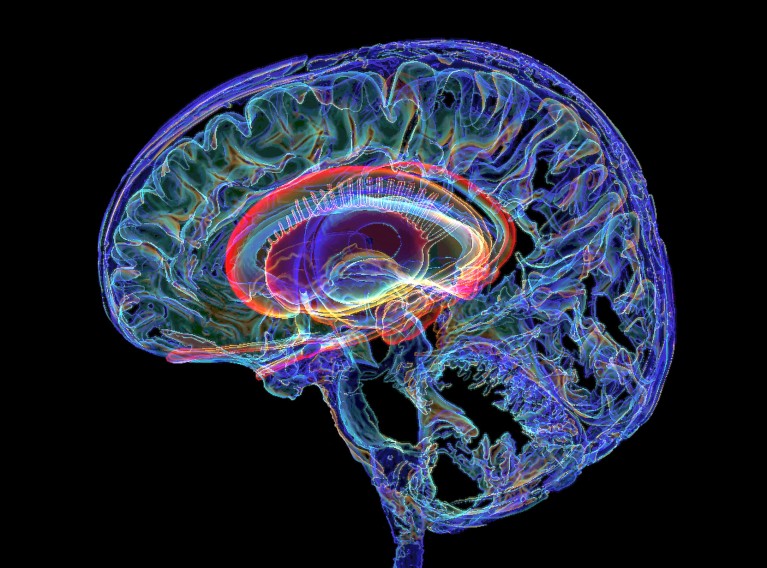
Your brain on drugs: different psychedelics work in surprisingly similar ways
Summary
Researchers pooled data from 11 brain-imaging studies — more than 500 scans from 267 people — to find a common neural “signature” produced by five psychedelics (psilocybin, LSD, mescaline, DMT and ayahuasca). Contrary to the prevailing notion that psychedelics collapse brain networks, the analysis found increased functional connectivity: higher-level cognitive networks showed stronger crosstalk with each other and with sensory, motor and subcortical regions. The study, described as the largest of its kind, suggests a shared mode of action across chemically different psychedelics and has implications for therapeutic drug design and understanding psychedelic effects on perception and mood.
Key Points
- Largest pooled neuroimaging analysis to date: 11 studies, >500 scans from 267 participants.
- Detected a shared brain-activity pattern across five different psychedelics (psilocybin, LSD, mescaline, DMT, ayahuasca).
- Psychedelics increased functional connectivity, boosting crosstalk among high-level cognitive networks.
- These cognitive networks also became more connected to sensory, motor and subcortical systems during drug exposure.
- Findings challenge the view that psychedelics simply disintegrate networks and could guide future therapeutic development for depression, anxiety and addiction.
Content summary
The team, led by neuroscientists including Danilo Bzdok, developed a method to combine and analyse fluctuating activity across multiple brain regions and applied it to datasets from the UK, Switzerland, the Netherlands, the US and Brazil. Where earlier small studies sometimes conflicted, this pooled approach highlights a reproducible pattern: rather than fragmenting brain organisation, psychedelics appear to increase cross-network communication, including links between perception/reward-related subcortical areas and higher cognitive systems. The result refines hypotheses about how psychedelics alter perception and cognition and supports further investigation into clinical applications.
Context and relevance
This study matters because it moves psychedelic neuroscience beyond small, scattered studies to a clearer, more generalisable picture. By revealing a common neural effect across chemically diverse drugs, it informs theories of consciousness and perception and provides a mechanistic foothold for developing psychedelic-based therapies. The work is timely given rising clinical trials and regulatory interest in psychedelic-assisted treatments.
Why should I read this?
Quick and dirty: if you’ve ever wondered what psychedelics actually do to the brain, this does the legwork for you. Different drugs, similar effect — they crank up the chatter between brain regions rather than just smashing networks. It’s a neat pivot from the old story and worth a skim if you follow mental-health research, neuroimaging or the evolving field of psychedelic medicine. We’ve saved you the time — the paper gives a clearer signal from lots of noisy studies.