
AlphaFold is five years old — these charts show how it revolutionized science
Summary
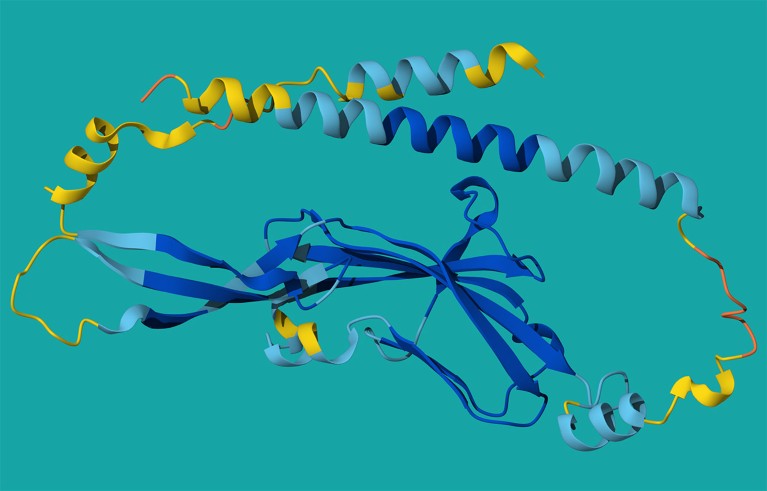
AlphaFold2, unveiled by Google DeepMind in late 2020 and with its code and database released in 2021, has transformed structural biology by providing highly accurate 3D models for proteins at unprecedented scale. The AlphaFold Protein Structure Database (AFDB), hosted by EMBL-EBI, contains over 240 million predicted structures and has been accessed by roughly 3.3 million users across more than 190 countries. Researchers report that AlphaFold speeds discovery (for example, revealing how zebrafish egg protein Bouncer binds sperm via a Tmem81-stabilised pocket), complements experimental data from X-ray crystallography and cryo-electron microscopy, and is associated with sustained high citation rates and increased submissions to the Protein Data Bank (PDB).
Key Points
- AlphaFold2 (2020 release, with 2021 code/database) delivered a leap in protein-structure prediction accuracy.
- The AFDB hosts over 240 million predicted protein structures and has ~3.3 million users in 190+ countries, including >1 million users from low- and middle-income countries.
- AlphaFold has been cited in ~40,000 journal articles since the 2021 Nature paper, and its citation rate remains high compared with many other life-science breakthroughs.
- Researchers using AlphaFold deposit about 50% more experimental protein structures to the PDB than comparable non-users, indicating it accelerates and amplifies experimental work.
- AlphaFold models help interpret experimental maps and guide wet-lab experiments — speeding discoveries such as the Tmem81–Bouncer fertilisation mechanism.
- The tool’s openness (code and database release) and global accessibility are central to its rapid and widespread uptake.
Context and relevance
AlphaFold sits at the intersection of machine learning and molecular biology, effectively scaling structural insights across the protein universe. Its release sparked an AI-driven shift in how labs approach structural problems: many teams now use predicted models as a starting point for experiments, which reduces time and cost for structure determination. The technology also feeds wider trends — drug discovery efforts, data-centric biotech strategies, and efforts by industry to build tailored models as public datasets approach saturation. For anyone involved in life sciences, biotech, computational biology or AI-for-science, AlphaFold’s trajectory is a bellwether of how AI can reshape research workflows and accelerate discovery.
Why should I read this?
Short version: if you care about how AI actually changed the way labs work, this is the quick tour. It shows the scale (hundreds of millions of structures), real wins in the lab (faster discoveries, more PDB deposits), and why researchers worldwide are using it. We’ve skimmed the charts and pulled the bits you need — less scrolling, more insight.
Author style
Punchy: This is a big deal. AlphaFold isn’t just a neat algorithm — it’s become infrastructure for biology. If your work or interests touch on proteins, drug discovery, or AI in science, read the details: they explain why this tool keeps gaining traction rather than fading after the hype.