
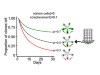
Order in which cancer-driving mutations occur affects the chance of tumour development
Summary
A new study in mouse models finds that although thousands of intestinal cells carry tumour-initiating (driver) DNA mutations, most of those mutant clones are removed by strong negative selection. The small fraction that persist remodel the tissue environment, making it more permissive for later mutations and opening new routes to tumour development. The work is summarised from Lourenço et al., “Decay of driver mutations shapes the landscape of intestinal transformation” (Nature, 2025).
Key Points
- Most intestinal cells with driver mutations are eliminated by negative selection in mice rather than progressing to tumours.
- A minority of surviving clones alter the local tissue environment, increasing permissiveness for subsequent mutations.
- The order and timing of driver-mutation events influence whether a tumour eventually forms.
- Findings were obtained using mouse models combined with sensitive sequencing and lineage-tracing approaches.
- Implications include refining how we assess early cancer risk and opportunities to intervene before permissive niches form.
Content summary
The authors tracked the fate of thousands of intestinal cells that acquired driver mutations. Contrary to a simple stepwise model where each driver steadily increases cancer risk, most such clones decline or disappear under negative selection. However, the few clones that survive do more than persist: they change local tissue dynamics (for example by altering competition or niche signals), which can make it easier for additional driver events to establish and expand. The net result is that the landscape of transformation depends strongly on which mutations occur first and on the timing between events.
Methodologically, the study combined engineered mouse models, deep sequencing and lineage analyses to observe clone behaviour over time, and used these observations to infer how decay of driver clones shapes the probability of progression to malignancy.
Context and relevance
This work challenges simplified models of tumourigenesis by emphasising selection and temporal order, not just the presence of drivers. It links to broader efforts that map somatic mutation landscapes in normal tissues and to research on clonal competition. For researchers and clinicians it suggests that early detection strategies should consider which clones persist and whether they create permissive microenvironments — not just catalogue mutations.
Why should I read this?
Quick and blunt: if you’re into cancer biology or translational oncology, this is a wake-up call. It shows that having a driver mutation isn’t a guaranteed one-way ticket to cancer — most get purged — but the unlucky survivors change the playground, and that’s where things get dangerous. The paper gives a sharper lens on risk and timing, which is useful if you’re designing early-detection tests, prevention strategies or trying to understand how tumours actually start. We’ve skimmed the heavy methods so you don’t have to — read the full paper if you want the experimental nuts and bolts.