
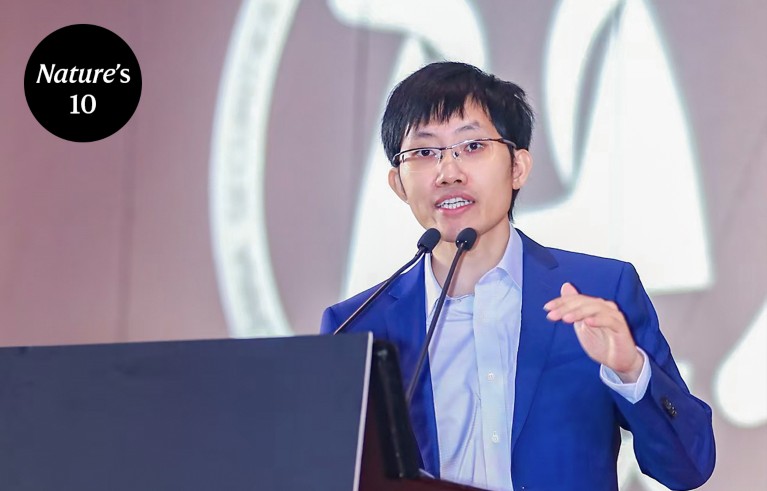
The Chinese finance whizz whose DeepSeek AI model stunned the world
Summary
Liang Wenfeng, a former finance analyst turned founder of DeepSeek, propelled the AI community into a new phase in 2025 by releasing R1 — a reasoning large language model (LLM) with open weights. R1 demonstrated strong stepwise problem‑solving abilities in areas such as maths and coding, achieved performance on a par with leading US models, and did so with substantially lower training costs. DeepSeek published its training recipe and became the first major LLM to face peer review, accelerating reproducibility and prompting other firms to release open models.
Key Points
- DeepSeek’s R1 is an open‑weight reasoning LLM that breaks complex tasks into steps and excels at maths and coding.
- R1 matched many top models’ capabilities while being much cheaper to train than major rivals.
- DeepSeek published detailed training methods and underwent peer review — a landmark for transparency in LLM research.
- Liang funded DeepSeek from profits made applying AI to financial markets and had stockpiled ~10,000 NVIDIA GPUs before export controls tightened.
- The company’s flat, talent‑first culture and openness pushed other Chinese and US teams to follow with their own open models.
Content summary
Liang Wenfeng, raised in Guangdong and educated at Zhejiang University, turned a decade of work in algorithmic trading into the resources to found DeepSeek in 2023. In January 2025 the firm released R1, surprising many by delivering high reasoning performance at a fraction of the usual training cost. By making R1’s weights available and publishing the training recipe, DeepSeek enabled researchers to build on and adapt the model. The company also welcomed unconventional hires and operated with limited hierarchy, fostering rapid research progress. Liang himself remains media‑shy.
Context and relevance
R1’s release shifted perceptions of national dominance in AI: it showed that lower training budgets, clever engineering and early hardware investment can produce highly capable open models. The paper and peer review established a precedent for transparency and reproducibility in LLM development, influencing both industry and academic practice. For researchers, startups and policymakers, DeepSeek’s approach is a live case study in how open models can reshape competition, collaboration and standards in AI.
Why should I read this?
Short version: want to know who just rewrote part of the AI rulebook and how they did it? Liang is a quiet ex‑quant who used hedge‑fund profits and a warehouse of GPUs to build a cheap, open, peer‑reviewed reasoning model that forced big players to change course. It’s a neat, fast read that saves you the time of digging through papers and press releases.