
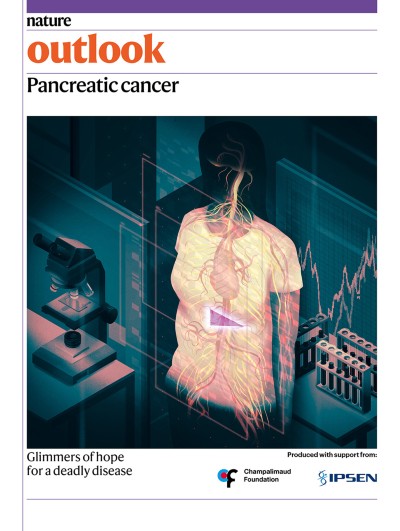
Therapeutic vaccines can challenge pancreatic cancer before it takes hold
Summary
Pancreatic cancer is among the deadliest cancers: late diagnosis, early spread and limited treatment options mean survival is poor. Recent vaccine efforts aim to train the immune system to find and destroy residual or emerging pancreatic-cancer cells. Two main strategies are under active development: personalised mRNA vaccines that present tumour-specific neoantigens, and off-the-shelf peptide vaccines that target common driver mutations in KRAS. Early trials (including collaborations with Genentech, BioNTech and companies such as Elicio) have shown safety and measurable T-cell responses; roughly half of participants in a personalised mRNA trial mounted detectable immune responses and some responders remained relapse-free after three years. KRAS-directed peptide vaccines have provoked responses in the majority of participants in phase I work and are moving into larger trials. Researchers are also testing prophylactic vaccination in people with pancreatic cysts or high genetic risk. The results are promising but preliminary — larger, randomised trials are needed to prove that immune responses translate into longer, curative survival.
Key Points
- Pancreatic cancer often presents late and is highly lethal; long-term survival is rare.
- Two vaccine approaches: personalised neoantigen mRNA vaccines versus KRAS-targeted peptide vaccines.
- Personalised vaccines induced immune responses in about half of trial participants; some responders were relapse-free at three years.
- KRAS mutations occur in ~93% of pancreatic cancers; KRAS peptide vaccines can be produced off-the-shelf and generated T-cell responses in most phase I recipients.
- Elicio reported KRAS-specific T-cell responses in 21 of 25 people in phase I; a phase II efficacy trial is planned with results expected by early 2026.
- Preventive trials are underway for people with pancreatic cysts or high genetic risk, with early indications of safe T-cell responses.
- Important caveat: current data are small and largely non-randomised — causation between vaccine and improved survival remains to be proven.
- If validated, vaccines could shift care from incremental survival gains to durable prevention or cure for many patients.
Context and relevance
Immunotherapy has transformed outcomes in other cancers, but pancreatic tumours are typically immunologically “cold” and shielded by dense stroma. Targeting tumour-specific neoantigens seeks to personalise the immune attack, while KRAS-focused vaccines aim at a near-universal driver mutation that appears early in tumour development. Both strategies rely on generating long-lived T-cell memory to prevent relapse and have implications for adjuvant (after surgery) and even preventive use in at-risk groups.
Author style
Punchy: This isn’t tinkering around the edges — these vaccine strategies could be paradigm shifting. Early signs of durable T-cell memory and measurable responses are real reasons for optimism, but the evidence is still early. Read the detail if you want the trial data, mechanisms and likely timelines.
Why should I read this?
Quick and blunt: pancreatic cancer is brutal and current treatments rarely cure. These vaccines are one of the few credible routes that might stop the cancer coming back — or even prevent it in people at risk. We’ve saved you the time of wading through all the papers: this summary tells you which vaccine types are leading, what early trials found, and what still needs proving. If you care about cancer research or have a stake in better pancreatic-cancer outcomes, this is worth your attention.