
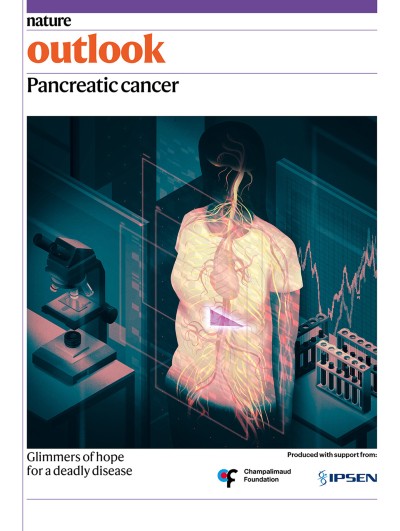
Early detection could improve pancreatic cancer’s poor survival rates
Summary
Pancreatic cancer is difficult to spot early because the pancreas sits deep inside the abdomen and early symptoms are vague and easily mistaken for common conditions. Most people are diagnosed after the cancer has already spread; stage-four five-year survival is around 3%.
Surveillance in well-defined high-risk groups (for example, those with a family history, genetic susceptibility or specific pancreatic cysts) has shown much better outcomes: a long-term screened cohort had markedly higher early-stage detection and five-year survival (50% vs 9% in a comparison group).
Population-wide screening isn’t feasible because pancreatic cancer is relatively rare. Researchers are therefore working to shrink the screening “haystack” by identifying higher-risk subgroups — one promising route is new-onset diabetes in older adults, which can sometimes be an early symptom of pancreatic cancer. Algorithms using electronic health records are being trialled to stratify risk and trigger imaging for those at highest risk.
Because MRI and endoscopic ultrasound are costly and not widely accessible, there is intense effort to develop blood-based biomarkers. Approaches in development include protease-activity assays (PAC-MANN), microRNA and exosome RNA panels, and cell-free DNA methylation/pattern tests such as Avantect. Early results are promising for some tests, but none are yet ready for routine population screening. The US National Cancer Institute is coordinating biomarker “bake-offs” to compare assays head-to-head.
Despite the challenges, incremental improvements in detection could substantially raise survival: survival has already moved from ~5% to ~13% over recent decades, and effective early detection could move that needle further.
Key Points
- Pancreatic tumours are hard to detect early because symptoms are vague and the organ is deep in the abdomen.
- Most people are diagnosed with advanced disease; stage-four five-year survival is ≈3%.
- Targeted surveillance of high-risk groups leads to earlier detection and much better outcomes (example: 50% vs 9% five-year survival in a screened cohort).
- Screening the general population isn’t feasible due to the cancer’s low lifetime risk (≈1–2%).
- New-onset diabetes in older adults is a promising signal: algorithms using age, weight change and glucose trajectories can flag people with substantially higher risk.
- Imaging (MRI, endoscopic ultrasound, CT) is effective but costly and limited in access; timely scanning is critical for benefit.
- Blood-based biomarkers under study include protease-activity assays (PAC-MANN), miRNA/exosome tests, and cell-free DNA pattern/methylation tests (Avantect); CA 19-9 has limitations.
- Independent comparisons (biomarker “bake-offs”) and larger, prospective validation on pre-diagnostic samples are essential before clinical rollout.
- Even small advances in early detection could substantially improve survival statistics and patient outcomes.
Author style
Punchy: this is a high-stakes field where smarter targeting and simpler blood tests could save lives. If the research here pays off, it will matter — a lot — for how we find and treat pancreatic cancer earlier.
Why should I read this?
Look — pancreatic cancer nearly always wins when we find it late. This piece shows the clearest routes researchers are taking to catch it earlier: spot high-risk people (think new diabetes after 50) and build cheap, reliable blood tests. It’s a fast way to grasp why current screening won’t work for everyone and what realistically could change outcomes in the near future.