
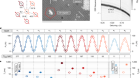
A modular quantum processor made using phosphorus atoms in silicon
Summary
A high-performance silicon-based quantum processor has been realised by encoding qubits in the spins of phosphorus atoms embedded in silicon. The device uses nine phosphorus nuclear spins split into two registers and two shared electrons to form an 11-qubit processor. The chip’s modular architecture — registers of nuclear-spin qubits linked by shared electronic qubits — points to a scalable route for building larger, more reliable quantum processors compatible with semiconductor fabrication.
Author’s take
Punchy: This isn’t hype — it’s a practical step that brings atom-scale, silicon-based quantum processors closer to something industry can work with. Read the full paper if you care about realistic scaling paths for quantum hardware.
Key Points
- The processor implements 11 qubits: nine phosphorus nuclear spins arranged in two registers plus two shared electrons.
- Design is modular: nuclear-spin registers act as memory/processing units while electrons provide shared connectivity between registers.
- Built in silicon, the approach aligns with existing semiconductor fabrication techniques, aiding prospects for scaling and integration.
- The work is reported as an experimental realisation that follows long-standing proposals to use donor atoms in silicon as qubits (Kane-type architectures).
- Modularity and atom-scale control open pathways to larger multi-register processors with improved reliability and manufacturability.
Why should I read this?
Quick and casual: if you want to know where real-world, scalable quantum chips might come from, this is a neat, tangible step. It shows silicon + single atoms isn’t just lab curiosity — it’s shaping up as a serious contender for building bigger quantum machines.
Context and relevance
This result matters because it ties quantum information experiments back into the semiconductor ecosystem. Using phosphorus donors in silicon follows decades of theoretical and experimental work and leverages industry-standard materials and techniques. A modular register-based architecture helps address two central challenges: connecting many qubits while preserving coherence, and doing so in a platform that can, in principle, be manufactured at scale. For researchers and engineers tracking viable hardware paths, this paper is a relevant milestone in the competition between superconducting, trapped-ion, and semiconductor-atom approaches.