
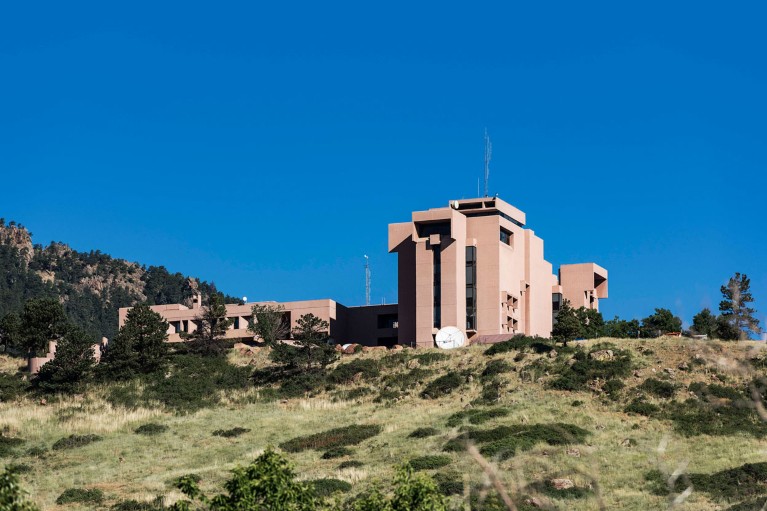
Trump team plans to break up ‘global mothership’ of climate science
Summary
Article Date: 17 December 2025
Article URL: https://www.nature.com/articles/d41586-025-04134-w
Article Image: https://media.nature.com/lw767/magazine-assets/d41586-025-04134-w/d41586-025-04134-w_51836546.jpg
The Trump administration has signalled plans to dismantle the National Center for Atmospheric Research (NCAR) in Boulder, Colorado — a central US facility that underpins much of national and global climate and weather research. The White House and its budget director framed the move as a purge of ‘climate alarmism’, while the National Science Foundation has sent UCAR (the consortium that runs NCAR) a letter of intent about divesting, transferring or restructuring parts of the centre, including its supercomputing centre and research aircraft fleet. Scientists, lawmakers and the research community have reacted strongly, promising legal and political fights to save NCAR.
Key Points
- The White House described NCAR as a source of ‘climate alarmism’ and announced plans to break it up; Russell Vought made the initial public statement on X.
- The National Science Foundation has issued a letter of intent to UCAR requesting plans to divest, transfer or restructure NCAR components, mentioning the Cheyenne supercomputing centre and research aircraft.
- NCAR is operated by UCAR, a consortium of over 130 universities; a 2023 agreement provided US$938 million for five years to run NCAR, which would be largely cancelled if the centre is closed.
- Researchers warn that dismantling NCAR would damage core US and global atmospheric and climate science, removing centralised capabilities (modelling, observations, supercomputing) that many institutions rely on.
- Political pushback is already forming: Boulder representative Joe Neguse and other members of Congress say they will use legal and budgetary tools to fight the directive.
- Scientists and organisations have launched #SaveNCAR efforts; many describe NCAR as the ‘global mothership’ of atmospheric science and warn of degraded forecasting and climate-data gaps if its functions are scattered or lost.
Content summary
NCAR was established by the NSF in 1960 to provide large-scale computing and observational capabilities beyond individual institutions’ means. Its work has been critical to modern weather and climate forecasting — for example, developing the dropwindsonde used to study hurricanes. The NSF’s request for information to UCAR has left staff demoralised and the research community alarmed. While the administration frames the move as correcting political bias, experts say the practical effect would be to fragment or eliminate centralised infrastructure, risking long-term damage to climate science, forecasting accuracy and international scientific collaboration.
Context and relevance
This story sits at the intersection of science, politics and national infrastructure. NCAR’s models, observations and supercomputing resources feed federal agencies, international partners and academic researchers; removing or dispersing those assets could create a data and capability void. The issue also highlights how federal funding decisions and political rhetoric can rapidly affect scientific institutions, staff morale and long-term research programmes. For readers interested in climate science, meteorology, research policy or US politics, this is a direct signal of potential structural change to how climate knowledge is produced and shared.
Why should I read this?
Short version: this isn’t just a budget cut — it’s a move that could rip apart the main hub everyone relies on for weather and climate data. If you care about reliable forecasting, climate research, or how science is funded and defended in the US, you’ll want the detail — and you’ll want to know who’s planning what next.
Author note
Punchy: The piece makes clear this is one of the most consequential threats yet to US climate-science infrastructure — so the politics and the technical fallout both matter. Read the full article for specifics on the NSF letter, which NCAR parts are at risk, and the early legal and congressional responses.