‘Shattered’: US scientists speak out about how Trump policies disrupted their careers
Summary
Nature’s careers team reports on the human cost of the first year of President Trump’s second administration for US science. Researchers describe widespread lay-offs, terminated grants, deep funding cuts and growing harassment that together have disrupted long-term research, hollowed-out teams at federal agencies (USGS, EPA, NIH, NOAA, CDC) and prompted some scientists to leave the country. The Union of Concerned Scientists recorded hundreds of actions viewed as attacks on scientific integrity in 2025, and databases show thousands of disrupted grants and billions of dollars in cancelled funding.
Content summary
The article pulls testimony from researchers and aggregated data to show the scale and speed of changes: agency job losses, frozen funding, halted monitoring and curtailed publications and conferences. It highlights specific impacts — reductions to environmental monitoring, truncated vaccine guidance work, and terminated grants at NIH and EPA — and reports that many affected staff felt unable to speak openly. It also notes political pushback: lawsuits, open letters and a Congressional move to rescue some agency budgets. Still, the future is uncertain and signs of a potential brain drain are visible.
Key Points
- Federal lay-offs and restructurings in 2025 hit major science agencies (USGS, EPA, NIH, NOAA, CDC), reducing capacity for research and monitoring.
- The Union of Concerned Scientists documented 536 actions in 2025 they view as attacks on science—more than double the incidents recorded during Trump’s first term.
- Over 7,800 NIH and NSF grants were disrupted in 2025; thousands were not reinstated, amounting to nearly $1.4 billion lost and hundreds of EPA grant terminations tracked separately.
- Researchers report halted projects, reduced field instruments and staff, and restricted travel and communication that limit scientific collaboration and dissemination.
- Some scientists are emigrating or seeking work abroad; others have spoken out, filed lawsuits or joined advocacy efforts to defend scientific integrity.
- Congress has pushed back in places, voting to restore several agency budgets, but long-term impacts and uncertainty remain amid growing international competition in science.
Context and relevance
This piece matters for anyone following research funding, public-health policy, environmental monitoring or academic careers. It ties short-term policy moves to long-term risks: loss of expertise, interrupted training pipelines and weakened evidence in policymaking. The article also sits within a broader trend of geopolitical shifts in scientific leadership and rising concerns about politicisation of research decisions.
Why should I read this?
Because it explains, in plain terms, how a year of policy decisions can wreck labs, drain expertise and scramble careers — and why that matters if you care about public health, climate, or the future of research. Short version: scientists are stressed, funding is shaky, and the work that protects people and the environment is at risk.
Author style
Punchy. Virginia Gewin cuts through the noise with direct accounts and concrete numbers — this isn’t abstract policy talk, it’s people losing jobs, projects and momentum. Read it if you want the human story behind the headlines.
Source
Source: https://www.nature.com/articles/d41586-026-00091-0
Article meta
Article Date: 20 January 2026
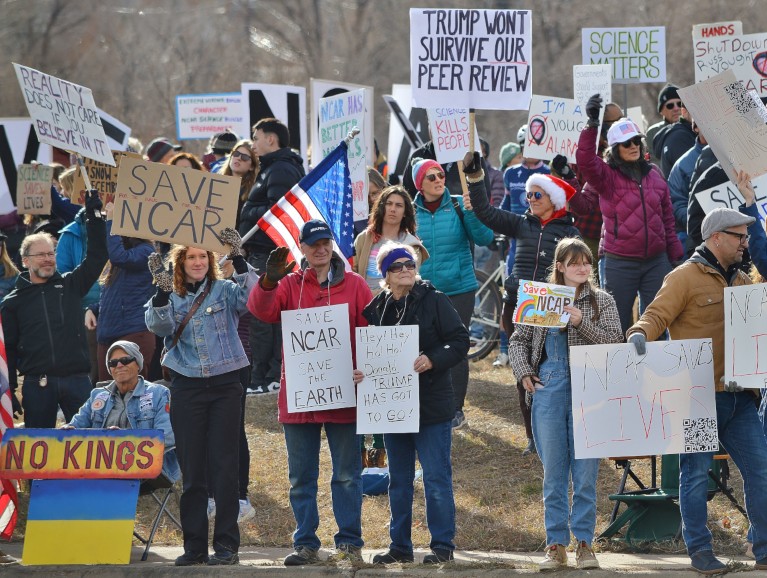
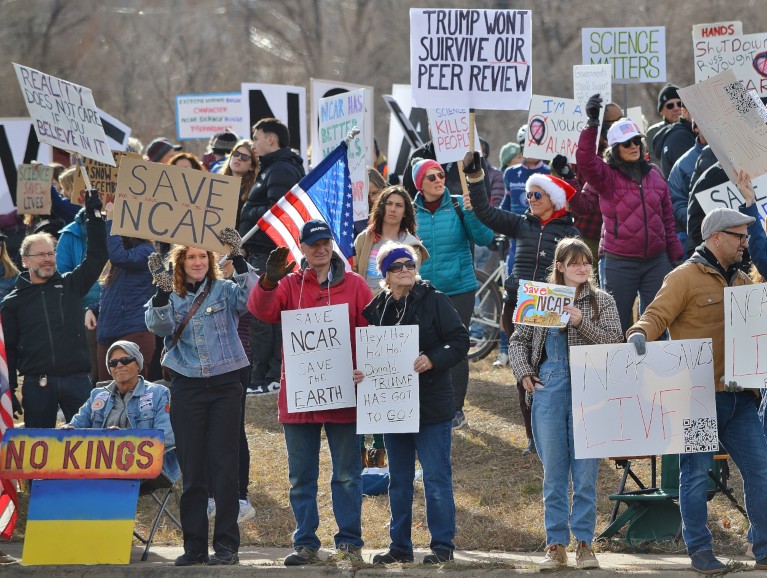
Article Image: Demonstrators protest image