
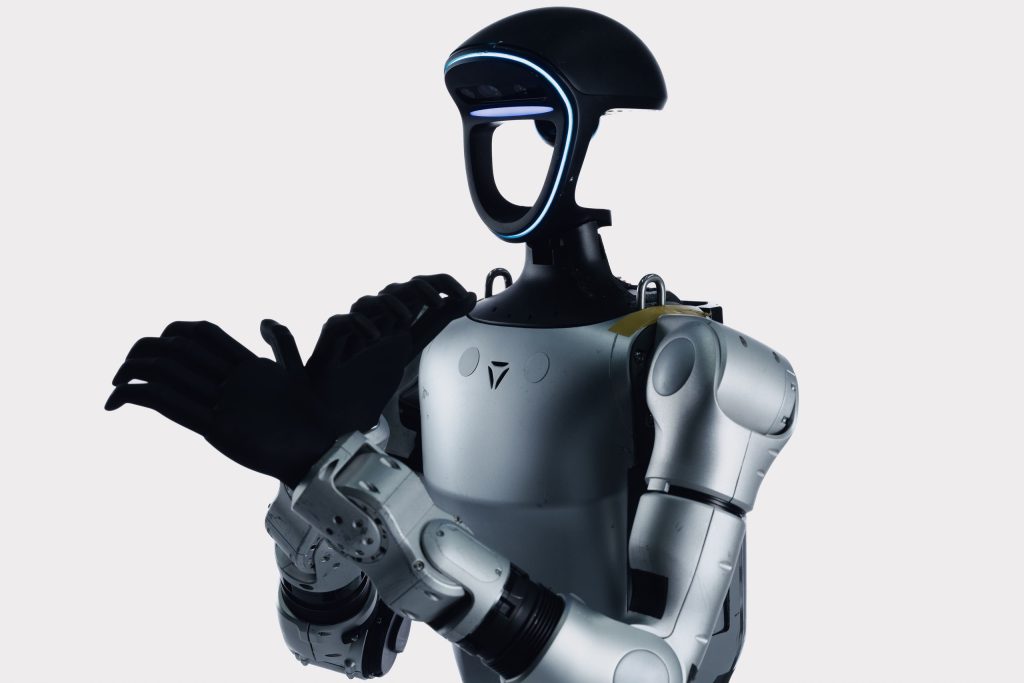
Your First Humanoid Robot Coworker Will Probably Be Chinese
Summary
The article profiles the rapid rise of Chinese humanoid-robot companies and explains why early practical humanoid robots are likely to come from China. It opens with a striking demo of a four-foot-tall robot that moves with surprising speed but limited finesse, then explores the industrial factors behind China’s lead: manufacturing scale, extensive supply chains, deep venture funding, and close ties between startups and state-backed industrial programmes. The piece also flags technical limitations (dexterity, reliability), safety and regulatory gaps, and the likely near-term use cases such as factories, warehouses and light industrial work.
Key Points
- China’s robotics firms are scaling fast thanks to manufacturing expertise and dense supply chains.
- Early humanoid robots show impressive speed and basic locomotion but still lack fine dexterity and robust manipulation.
- Cost advantages and mass production could make Chinese humanoids the first widely deployed co-workers.
- Government support, venture capital, and a competitive ecosystem accelerate iteration and deployment.
- Safety, regulation and real-world reliability remain unresolved — raising workplace and legal questions.
- Short-term use-cases are likely to be labour-augmenting roles in logistics and light manufacturing, not delicate skilled trades.
- Western firms may compete via software, specialised hardware, or partnerships, but face an uphill battle on cost and scale.
Content summary
Will Knight describes an early humanoid demo that is impressive in movement but uneven in control, using it to illustrate broader industry trends. Chinese startups are combining rapid hardware iteration with aggressive pricing and access to component suppliers, enabling breakthroughs in speed and production that Western rivals currently struggle to match. The article balances optimism about accelerating capabilities with caution about practical limits: gripping, nuanced manipulation and long-term reliability are still immature.
Beyond tech, the piece highlights structural drivers: coordinated industrial policy, plentiful capital, and a manufacturing ecosystem that can push prototypes to volume quickly. Those strengths make China the most likely source of the first mainstream humanoid co-workers — with wide implications for factories, labour markets and geopolitics.
Context and relevance
This story matters if you follow AI, robotics, manufacturing or labour policy. It connects the hardware-software race to real-world adoption: China’s advantage in production and iteration could determine where and how humanoid robots first appear in workplaces. The article ties into wider trends — “physical AI”, supply-chain geopolitics, and debates over automation’s social impact — and is useful for managers, policymakers and technologists planning for near-term robot adoption.
Why should I read this?
Want to know who’s making the robots that might end up beside you on the factory floor? This piece gives a quick, clear take on why China is currently best placed to ship practical humanoid co-workers first — and what those robots can and can’t do right now. It’s a short shortcut to the headline risks and opportunities so you don’t have to slog through a dozen manufacturer press releases.
Author style
Punchy — the writer mixes vivid demo scenes with industry analysis so the importance lands quickly. If you need to understand where humanoid robots will appear first and why, this is the sort of reporting that sharpens decisions and flags the parts of the story worth digging into.
Source
Source: https://www.wired.com/story/china-humanoid-robot-coworkers/