
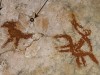
Hand stencils in Indonesian cave are world’s oldest known artworks
Summary
Rock art discovered in Sulawesi, Indonesia — specifically hand stencils — has been dated to at least 67,800 years ago, making these the oldest known cave artworks made by humans. The summary is based on a Nature paper (Oktaviana et al.) that used dating of mineral deposits that overlie the pigments to establish a minimum age. The findings shed light on the cultural practices and movements of populations who contributed to the ancestry of Indigenous Australian and Papuan peoples.
Author style (punchy): This is a major find — it pushes back the timeline and widens the map of early symbolic behaviour. If you care about when humans started making meaningful marks, this paper matters.
Key Points
- Hand stencils in Sulawesi are dated to a minimum age of about 67,800 years — currently the oldest confirmed cave art.
- Dating relied on analysing mineral (carbonate) deposits that formed over the pigment, giving robust minimum ages.
- The evidence suggests complex symbolic behaviour in Island Southeast Asia far earlier than many assumed.
- Results are relevant to the populations that contributed to the ancestry of Indigenous Australian and Papuan peoples, linking art with human movement and regional prehistory.
- The discovery expands the geographic and chronological record of early human rock art outside Europe, challenging narrow narratives about the origins of symbolic culture.
Context and relevance
The Sulawesi hand stencils matter because they change how we think about the origins and spread of symbolic behaviour. Rather than being a late or Europe-centred phenomenon, complex cultural expression appears to have been present in multiple regions by the Late Pleistocene. For researchers of human migration, cognition and cultural evolution, these dated stencils provide a crucial datapoint tying art to population history in Australasia and Island Southeast Asia.
Why should I read this?
Quick and informal: tiny handprints, huge implications. These stencils are the oldest known cave art — so if you like origin stories about art, migration or human minds, this is proper headline material. We’ve saved you time by pulling out the essentials, but the paper is worth a read if you want the dating details and the full archaeological argument.