
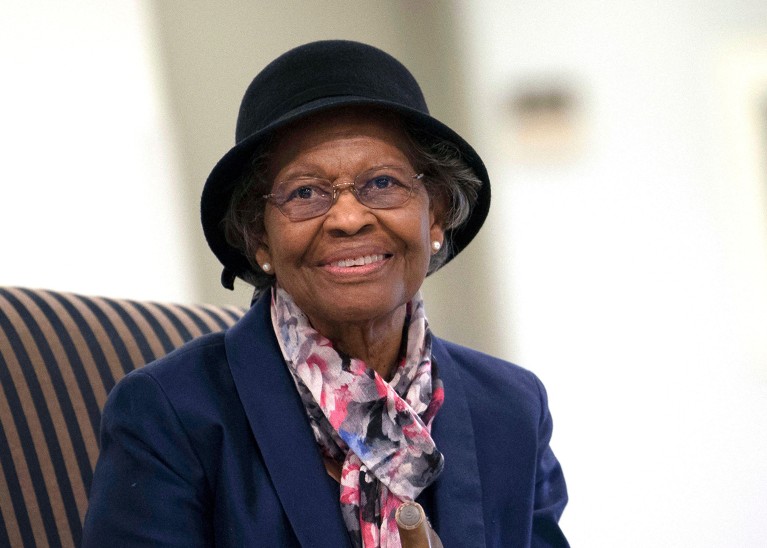
Gladys Mae West obituary: mathematician who pioneered GPS technology
Summary
Gladys Mae West, an American mathematician whose work underpinned modern GPS, has died aged 95. Despite facing the dual barriers of racism and sexism in mid-20th-century America, she programmed powerful computers and developed precise geodetic models from satellite data that helped define the shape of the Earth — a foundation for satellite navigation. Her career included major projects such as Project 29V, SEASAT altimetry and GEOSAT-based Earth modelling, using machines like the IBM 7030 Stretch.
Key Points
- West contributed foundational mathematics and programming that were essential to the development of GPS technology.
- She worked on high-profile projects: calculating Pluto’s orbit (Project 29V), SEASAT radar altimetry, and GEOSAT-based geodetic modelling.
- Her analysis used early supercomputers (notably the IBM 7030 Stretch) to model Earth’s shape, accounting for gravitational and tidal variations.
- West achieved these technical milestones while navigating severe racial segregation and workplace discrimination in the US military research environment.
- Her work remained partly hidden by military secrecy, delaying wider recognition of her impact on navigation and geodesy.
Content summary
Born into a farming family in rural Virginia, West excelled academically and earned a scholarship to Virginia State College, obtaining a master’s degree in 1955. She joined the Naval Proving Ground at Dahlgren, becoming one of very few Black women in that research setting. Early work included massive computational tasks such as a five-billion-calculation programme to confirm Pluto’s orbital regularity.
Later, at the Defense Mapping Agency, West managed data projects that modelled Earth’s environmental and oceanographic features. Using satellite altimetry from SEASAT and later GEOSAT, she and her team built an improved geodetic Earth model — an essential step towards the centimetre-level accuracy needed for modern GPS.
Context and relevance
West’s career sits at the intersection of Cold War-era investment in computation and the long, ongoing development of global navigation systems. Her modelling work is directly relevant to today’s GPS-dependent world: from civilian navigation and mapping to scientific Earth observation and autonomous systems. The obituary is also part of a broader movement recognising overlooked contributions by women and Black scientists to critical technologies.
Why should I read this?
Because it’s the story behind the tech you use every day — told fast. West quietly helped build the maths that makes GPS possible, all while fighting segregation and being sidelined by secrecy. If you care about where modern navigation came from, or about giving overdue credit to overlooked scientists, this is a quick, worthwhile read. We’ve saved you the bother of trawling archives — this sums up her life and why it matters.