

Sleep-dependent clearance of brain lipids by peripheral blood cells
Summary
Article Date: 11 February 2026
Article URL: https://www.nature.com/articles/s41586-025-10050-w
Article Image: Figure 1
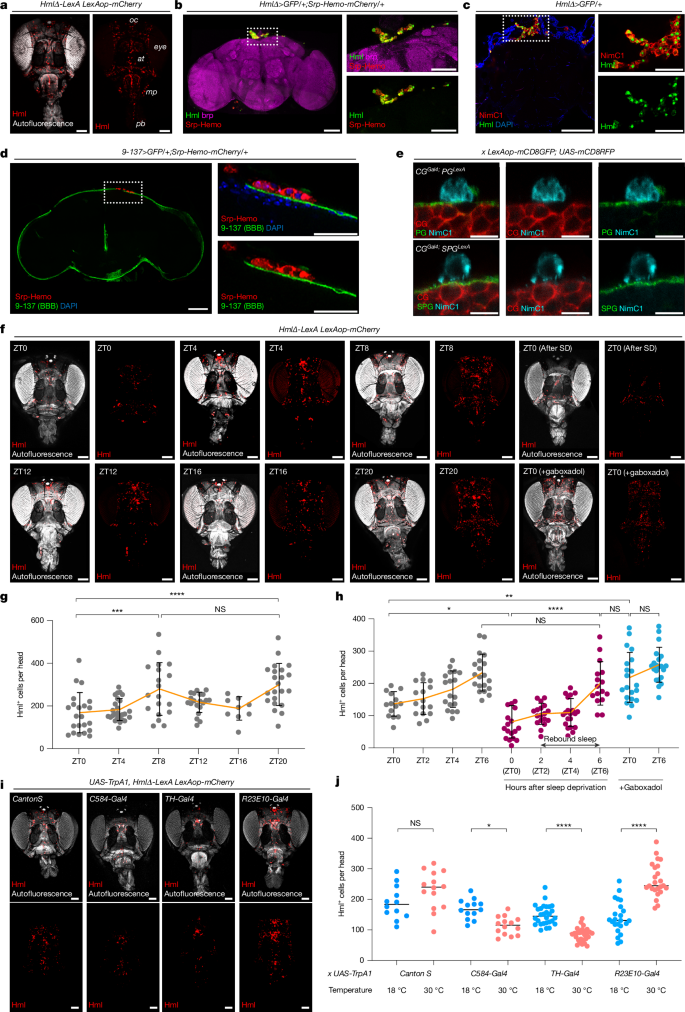
This Nature study in Drosophila shows that circulating macrophage-like blood cells (haemocytes) are recruited to the head during sleep and physically contact blood–brain barrier (BBB) glia. Haemocytes use the receptor Eater to take up lipid droplets (LDs) from cortex glia. When Eater is absent or reduced, LDs build up in glia, acetyl-CoA and protein acetylation rise, NAD+ falls, mitochondria show signs of dysfunction and oxidative stress increases. These metabolic disturbances correlate with reduced and fragmented sleep, memory deficits and shorter lifespan. Restoring haemocyte Eater expression or transferring wild-type haemocytes rescues sleep; nicotinamide partially ameliorates sleep loss, linking lipid clearance to brain metabolic health and sleep function.
Key Points
- Haemocytes localise to the fly head and contact BBB glia preferentially during sleep; recruitment falls with sleep deprivation and increases with sleep induction.
- The haemocyte transmembrane receptor Eater is necessary in haemocytes to maintain normal sleep amount and continuity.
- Eater mediates uptake of lipid droplets from cortex glia (and modified LDL species, particularly acetylated/oxidised forms), transferring glial lipids to haemocytes.
- Loss of Eater causes lipid accumulation in cortex glia, increased acetyl-CoA and global protein acetylation, reduced NAD+, mitochondrial oxidation/ROS and impaired mitochondrial regulatory proteins (PGC1α/Srl, DRP1) acetylation.
- These metabolic derangements associate with fragmented sleep, memory impairments and reduced lifespan; haemocyte transfer or haemocyte-specific Eater rescue restores sleep.
Why should I read this?
Short version: while you snooze, blood cells are doing a clearing job in the brain. This paper flips the usual view that sleep-only clears waste inside the brain — it shows peripheral immune cells actively remove glial lipids via Eater during sleep, and when that tidy-up fails the brain’s metabolism goes off the rails. If you care about sleep biology, neuroimmunology or links between metabolism and neurodegeneration, this one’s essential reading — it connects cellular lipid handling to sleep, cognition and lifespan in a neat, mechanistic way.
Context and relevance
This work expands the idea of sleep-dependent clearance beyond intracerebral mechanisms (glymphatic-like or BBB endocytosis) to include peripheral immune cells as active participants. In Drosophila, haemocytes appear to act analogously to mammalian microglia/macrophages for lipid handling, particularly of oxidised/acetylated lipids that accumulate in cortex glia after wake. The findings are relevant to ongoing trends linking lipid metabolism, protein acetylation and NAD+ biology to neuronal health and ageing. The mechanistic chain—impaired peripheral lipid uptake → glial lipid overload → raised acetyl-CoA and protein acetylation → mitochondrial dysfunction → sleep loss and cognitive decline—offers testable nodes for therapeutic intervention (for example NAD+ precursors or ways to enhance peripheral lipid clearance).
Author’s take (punchy)
Big-picture: sleep isn’t just letting neurons rest — it’s the time when the periphery helps mop up lipids that would otherwise stress brain mitochondria. This is a bold demonstration that blood cells contribute directly to brain metabolic homeostasis during sleep. Read the full paper for the data on Eater, lipid species, acetylation and the rescue experiments — there are nice genetic and biochemical hooks for follow-up work.