
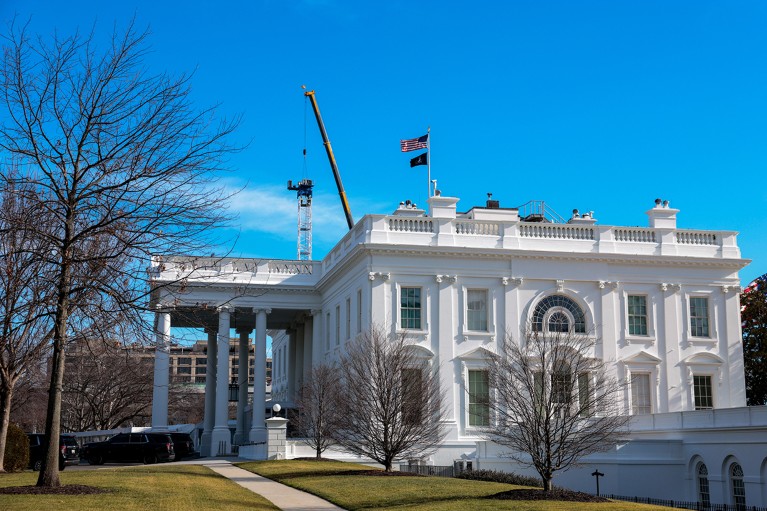
Trump team’s new rule could make firing government scientists easier
Summary
The US Office of Personnel Management (OPM) finalised a rule on 5 February 2026 creating a new employee category, ‘Policy/Career’, which strips certain career civil servants of longstanding job protections. The reclassification targets staff who are judged to influence government policy — a definition critics say is broad enough to include grant officers and researchers at agencies such as the NSF and NIH. The rule allows removal of Policy/Career employees for ‘subverting Presidential directives’ and is expected to affect roughly 50,000 federal workers. Agencies have already started compiling lists of positions to convert. The change follows President Trump’s earlier attempts (Schedule F) to politicise the civil service and has prompted strong opposition, legal challenges and widespread critical public comment.
Key Points
- OPM finalised a rule creating a ‘Policy/Career’ class that removes standard civil-service job protections.
- The rule permits firing employees for ‘subverting Presidential directives’, a phrase opponents say is vague and open to abuse.
- An estimated ~50,000 federal employees could be reclassified, and agencies including NSF and NIH are reviewing staff involved in grant decisions.
- 94% of public comments on the proposal were critical; unions and civil-service advocates plan legal challenges.
- The move revives elements of Trump’s previous Schedule F plan but stops short of converting roles to political appointments; it still weakens whistleblower and due-process protections.
- Scientists fear politicisation of peer review and grant awarding, plus a chilling effect on independent research and advice to government.
- OPM director says the change will restore accountability of the Executive Branch to the electorate rather than to career bureaucrats.
Content summary
The OPM rule, effective in early March 2026, builds on President Trump’s executive orders to reshape the federal workforce. By designating some career staff as Policy/Career, agencies can more quickly remove individuals deemed to be obstructing presidential directives. Staff at research-funding agencies are particularly anxious because positions involved in awarding grants and conducting scientific review are explicitly under consideration for reclassification. Many scientists and professional groups argue that equating objective scientific evaluation with policy-making undermines the separation between evidence-based assessment and political advocacy.
Public response during the comment period was overwhelmingly negative, and unions such as the American Federation of Government Workers have vowed to challenge the rule in court. The debate echoes the earlier Schedule F effort from Trump’s first term but may have faster operational impact because agencies are already identifying roles for conversion.
Context and relevance
This change sits at the intersection of government personnel policy and the integrity of publicly funded science. If enacted at scale, the rule could alter who decides what research gets funded and how evidence is interpreted in policy-making. That has implications for reproducibility, long-term projects, and the willingness of scientists to speak out as whistleblowers or provide candid advice. The rule also signals a broader trend towards politicising administrative functions and could affect international perceptions of US science leadership and collaboration.
Author style
Punchy: the piece flags a concrete administrative move with wide-ranging effects. If you follow science policy, research funding or civil-service law, the article’s details matter — it isn’t just bureaucratic tinkering.
Why should I read this?
Because this isn’t academic nitpicking — it could change who gets to decide UK and global collaborations with US agencies, who wins grants, and whether government scientists can speak freely. Short version: if you care about independent science, funding fairness, or the stability of long-term research, you want to know what’s being put in place now.