
Can a mouse be cloned indefinitely? Decades-long experiment has answers
Article Date: 24 March 2026
Article URL: https://www.nature.com/articles/d41586-026-00945-7
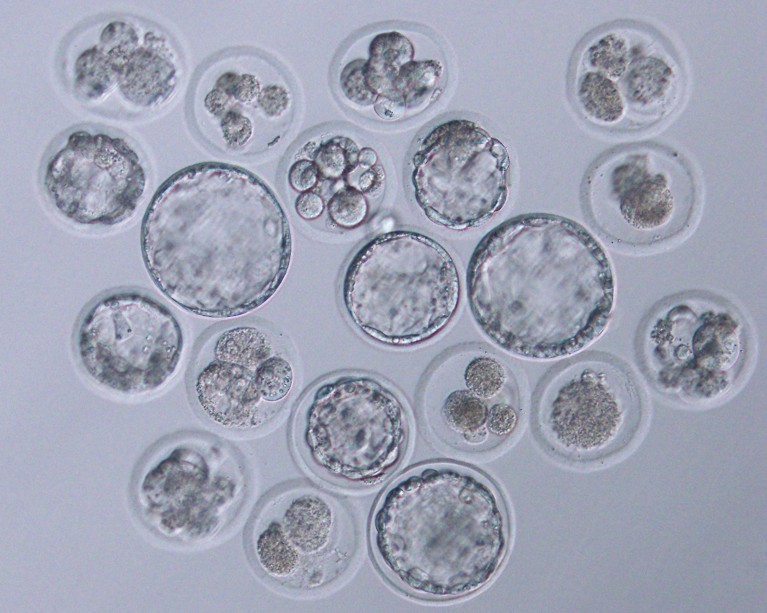
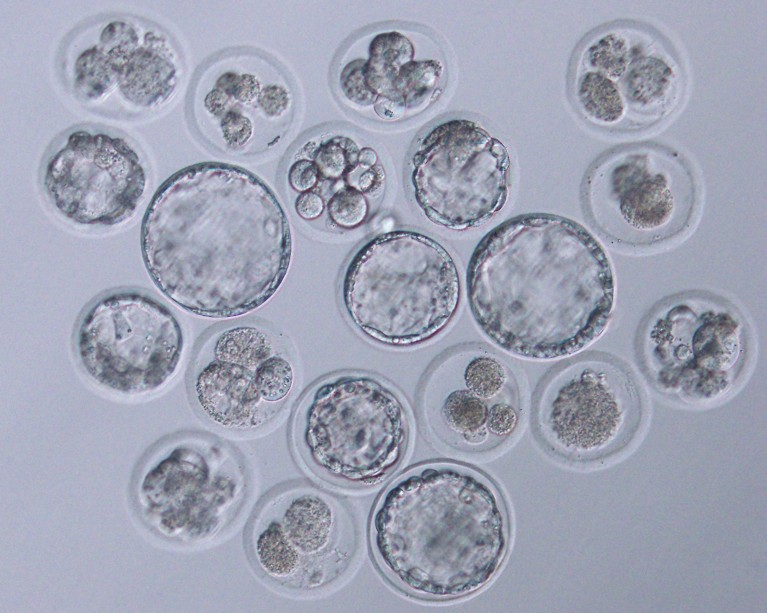
Article Image: Embryo image
Summary
After more than 20 years, 58 generations and over 30,000 cloning attempts from a single mouse lineage, researchers have reached a limit: repeated cloning eventually failed. The cloned mice looked normal and lived typical lives, but the lineage accumulated unusually large DNA changes — including whole‑chromosome loss — that the authors argue made further cloning impossible. The findings, reported in Nature Communications, suggest that asexual reproduction by cloning is ultimately unsustainable for mice and possibly for other mammals, with implications for conservation and agriculture.
Key Points
- Researchers attempted serial cloning across 58 generations and ~30,000 procedures over two decades.
- Cloned mice appeared phenotypically normal and had typical lifespans despite genetic problems.
- Large, harmful mutations accumulated at a high rate in the cloned lineage, including loss of an entire chromosome.
- The accumulation of irreversible mutations is likely the reason later cloning attempts failed.
- Findings imply limits to indefinite cloning in vertebrates, affecting strategies for breeding, conservation and agriculture.
- Work was led by Teruhiko and Sayaka Wakayama, pioneers in mouse cloning who have repeatedly pushed technical boundaries.
Content summary
The team built a single cloned mouse lineage stretching over decades. Early generations were clonable, but by the 58th generation further cloning failed despite many attempts. Genomic analysis showed an unexpectedly high rate of large structural mutations in the lineage; these are not easily purged without sexual reproduction, which mixes genomes and removes deleterious changes. The researchers conclude that accumulated damage — not technical skill — explains the eventual collapse of clonability. The report references Wakayama’s long history of cloning advances, from the first cloned mouse to success with frozen and unusual sample types.
Context and relevance
This result matters beyond lab curiosity. It challenges the idea that cloning can indefinitely preserve an optimal genome for livestock or endangered species. For conservationists and agricultural breeders considering cloning as a way to maintain elite genotypes, the study highlights a long‑term risk: irreversible mutation build‑up. It also touches on fundamental evolutionary questions about the necessity of sexual reproduction to purge harmful genetic changes.
Author style
Punchy: The piece is written to cut to the chase — long-term, careful work showing a clear, worrying limit to cloning. If you care about genetics, conservation or animal breeding, the article is important: it reframes cloning as a finite tool, not a permanent fix.
Why should I read this?
Short version: this wasn’t a one‑off — it was two decades of persistence that found a real ceiling. If you’re interested in cloning, conservation or how genomes fail over time, this saves you the slog of reading 30,000 lab reports. It explains why cloning isn’t a forever solution and why sex (yes, really) still matters for keeping genomes healthy.