
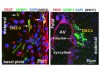
Mapping the maternal–fetal interface through pregnancy in high resolution
Summary
This Nature Research Briefing summarises a high-resolution single-cell and spatial transcriptomics study (Wang et al.) that maps the human maternal–foetal interface across pregnancy. The work charts individual cell types, their spatial arrangements and how cell–cell interactions change through gestation. The map highlights specific immune and trophoblast populations and pinpoints cell types that seem vulnerable in common pregnancy complications such as pre-eclampsia and pregnancy loss. The dataset and analyses provide a resource for understanding placental function and dysfunction.
Key Points
- The study uses single-cell and spatial methods to profile the maternal–foetal interface at high resolution across gestation.
- Distinct trophoblast and maternal immune cell states are resolved and tracked over time.
- Spatial maps reveal which cell types interact closely at the placenta–uterus junction and how those interactions evolve.
- Specific cell types and interaction pathways are implicated as vulnerable in pregnancy complications (for example, pre-eclampsia).
- The authors provide a publicly accessible dataset and reference map to support follow-up research and biomarker discovery.
Context and relevance
Understanding the placenta and its interface with the maternal uterus is critical for deciphering causes of pregnancy complications. By combining single-cell resolution with spatial context, this work moves beyond lists of cell types to show where cells sit and who they talk to — essential information for identifying mechanistic culprits in conditions such as pre-eclampsia, fetal growth restriction and recurrent pregnancy loss. The resource will be valuable to developmental biologists, obstetrics researchers and anyone working on translational diagnostics or therapeutics for pregnancy disorders.
Why should I read this?
Short and sweet: if you care about how pregnancy goes right (or wrong), this is the atlas you want in your pocket. It saves you the slog of combing many datasets — the study pulls together spatial and single-cell evidence to show which cells and interactions actually matter across pregnancy. Read it for a clear roadmap of where to look for biomarkers or drug targets.
Source
Source: Mapping the maternal–fetal interface through pregnancy in high resolution (Nature)